PNAS
Proceedings of the National Academy of Sciences (PNAS), a peer reviewed journal of the National Academy of Sciences (NAS) - an authoritative source of high-impact, original research that broadly spans...
Bots have made their way to Prolific experiments. Our lab has stopped online testing of adults entirely now for this reason - we want to know if what we study is real. Probably data collected 2-3 years ago are ok, but moving forward we just can't know. www.pnas.org/doi/10.1073/...
19.02.2026 15:14
👍 170
🔁 98
💬 6
📌 11

Top left: Experimental paradigm. The authors analyzed EEG data recorded from 49 sleeping human newborns while being exposed to monophonic piano melodies composed by J. S. Bach (real condition) and control stimuli (shuffled condition). Top right: Surprise and entropy. Surprise and entropy associated with each note’s timing (green, St and Et, respectively) and pitch (yellow, Sp and Ep, respectively) were estimated using an unsupervised statistical learning model trained on all stimuli. Dot plots display mean surprise and entropy associated with real and shuffled music, averaged across melodies (left panel), and separately for each melody (right panel). Bottom: Analytical approach. Multivariate Temporal Response Function (mTRF) models were fit to describe the forward relationship between multiple stimulus features and the EEG signal. The full TRF model (leftmost panel) included acoustic low-level features (spectral flux, acoustic onset, IOI, and IPI) and high-level features (surprise and entropy of pitch and timing).
Does our very human ability to anticipate #musical structure exist at birth? @robertabianco.bsky.social @giacomonovembre.bsky.social &co show that #newborns encode #rhythmic (but not melodic) expectations based on statistical regularities in real #music @plosbiology.org plos.io/4kqKVWg
09.02.2026 08:55
👍 11
🔁 7
💬 1
📌 0
![Neural activity correlated with the coefficient of the standard value-based model. Coronal (left) and sagittal (right) views of the brain. Only neural activity in the ACC (MNI coordinate = [−12, 36, 32]; uncorrected p < 0.001) and a peak cluster in the dACC were found (p < 0.005 uncorrected for display purposes).](https://cdn.bsky.app/img/feed_thumbnail/plain/did:plc:5522ztebtekoor5efelihqhb/bafkreiatleo4g2enoslndnaqggwts2hpva3itldkodtqndnu6pm6sr3p6i)
Neural activity correlated with the coefficient of the standard value-based model. Coronal (left) and sagittal (right) views of the brain. Only neural activity in the ACC (MNI coordinate = [−12, 36, 32]; uncorrected p < 0.001) and a peak cluster in the dACC were found (p < 0.005 uncorrected for display purposes).
Traditional behavioral models of bargaining interpret acceptance of #unfair offers as simple reward maximization. This study shows that #inequality aversion also shapes these decisions and identifies the #dACC as a regulator of responses to disadvantageous inequity @plosbiology.org 🧪 plos.io/4kmRadA
09.02.2026 09:01
👍 9
🔁 2
💬 1
📌 0
Incredible article which points out that it often collectively costs more to apply for scarce research funding than the funds awarded to the successful proposals.
What an absurd system we've built in the service of efficiency and competition.
www.nature.com/articles/d41...
13.01.2026 20:55
👍 267
🔁 98
💬 11
📌 20

Voxelwise Encoding Models (VEMs) are a great framework for modeling fMRI data, but it can be difficult to implement. We've made VEM accessible by providing software, tutorials and reviews that guide its use an implementation. Get it here:
gallantlab.org/blog/2025-12...
#neuroscience, #neuroimaging
23.12.2025 20:31
👍 47
🔁 13
💬 3
📌 0

Birds are both intelligent and incredibly agile, yet they are quite small. How do they achieve this with their little brains?
They have twice as many neurons per brain mass than mammals, including primates.
www.pnas.org/doi/abs/10.1...
07.11.2025 12:55
👍 56
🔁 10
💬 2
📌 3
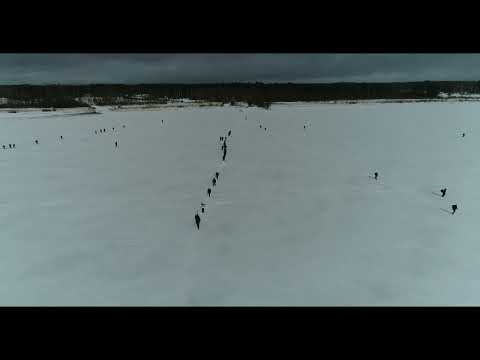
What is driving social foraging dynamics in the wild? In a new pre-print, we investigate decision-making mechanisms in large groups of Finnish ice-fishers competing for resources: osf.io/preprints/ps...
Big thanks to drone pilot Félicie Dhellemmes.
1/n
youtu.be/I_RH2diXcAk
01.03.2025 17:23
👍 43
🔁 21
💬 2
📌 4
Sometimes I think about how from 1935-1975ish, Bell Labs produced an insane amount of revolutionary science and technology, including 11 Nobel Prizes, the transistor, UNIX, C, the laser, the solar cell, information theory, etc. The secret? Provide scientists with ample, steady, no-strings funding.
04.10.2025 17:35
👍 1729
🔁 487
💬 51
📌 35

Meme showing a worker labelled "academic staff" digging a hole in the ground while 10 others look labelled with management titles such as "Director of Human Resources" look on. The caption underneath reads "The only way we can cut costs is to reduce the number of academic staff..."
A meme for the modern university...
29.09.2025 20:44
👍 292
🔁 107
💬 8
📌 9
Our #sEEG study is now published in Nature Communications: rdcu.be/eIkoG! 🧠
Key finding: We discovered neural evidence accumulation for visual perception that's independent of report preparation—recorded from >3000 channels across 3 experiments!
#Neuroscience #Consciousness #OpenAccess
29.09.2025 15:27
👍 38
🔁 15
💬 0
📌 2


New in @pnas.org: doi.org/10.1073/pnas...
We study how humans explore a 61-state environment with a stochastic region that mimics a “noisy-TV.”
Results: Participants keep exploring the stochastic part even when it’s unhelpful, and novelty-seeking best explains this behavior.
#cogsci #neuroskyence
28.09.2025 11:07
👍 98
🔁 36
💬 0
📌 3
OSF
detection d' is generally overestimated, coz we tend to be too lazy to collect the necessary data in order to correct for the unequal variance between target present vs absent distributions. turns out we can do this for free - using reaction times data. so, let's do it~
osf.io/preprints/ps...
🧠📈
25.09.2025 03:04
👍 32
🔁 9
💬 0
📌 2
Common neural choice signals reflect accumulated evidence, not confidence! Now out in @cerebralcortex.bsky.social w @helenevanmarcke.bsky.social @pierreledenmat.bsky.social @yfvisser.bsky.social @denizerdil.bsky.social a.o.
Paper: desenderlab.com/wp-content/u... Thread ↓↓↓
19.09.2025 10:47
👍 47
🔁 21
💬 1
📌 0

Transitions in dynamical regime and neural mode during perceptual decisions - Nature
Simultaneous recordings were made of hundreds of neurons in the rat frontal cortex and striatum, showing that decision commitment involves a rapid, coordinated transition in dynamical regime and neura...
How does the brain decide? 🧠
Our new @nature.com paper shows that neural activity switches from an 'evidence gathering' to a 'commitment' state at a precise moment we call nTc.
After nTc, new evidence is ignored, revealing a neural marker for the instant when the mind is made up.
rdcu.be/eGUrv
17.09.2025 20:12
👍 250
🔁 97
💬 13
📌 2
OSF
Our new EEG + modeling work using the beads task is now preprinted osf.io/preprints/ps..., led by Christina Dimitriadou @rhulpsychology.bsky.social
15.09.2025 11:26
👍 0
🔁 1
💬 0
📌 0


Interested in #EEG #FPVS #FaceLearning?
*An Ecological and Objective Neural Marker of Implicit Learning of Unfamiliar Identities*
Preprint 👉 osf.io/preprints/ps...
@bfh-ch.bsky.social University of Malta @snsf.ch
04.09.2025 06:03
👍 4
🔁 4
💬 0
📌 0
🚨We believe this is a major step forward in how we study hippocampus function in healthy humans.
Using novel behavioral tasks, fMRI, RL & RNN modeling, and transcranial ultrasound stimulation (TUS), we demonstrate the causal role of hippocampus in relational structure learning.
28.08.2025 14:00
👍 130
🔁 47
💬 2
📌 6
statistician: But aren't you assuming normality?
28.08.2025 15:24
👍 3
🔁 0
💬 0
📌 0

A world without experts: alienation in academia
Thoughts on the level of alienation in academic work, and how as much as we cannot exit the economy, we must recognise the inherent value of academia.
This is good on the extraordinary alienation that has now grown up in academia. The gap between the values of lecturers and the universities that employ them are now a huge unbridgeable chasm. One stands for education, the other institutional self-interest. blog.matthewbarnard.phd/a-world-with...
27.08.2025 18:20
👍 47
🔁 18
💬 1
📌 3

Windows Notepad, the native simple text editor, now has formatting options and a Copilot button.
Look what they did to Notepad. Shut the fuck up. This is Notepad. You are not welcome here. Oh yeah "Let me use Copilot for Notepad". "I'm going to sign into my account for Notepad". What the fuck are you talking about. It's Notepad.
27.08.2025 01:41
👍 17428
🔁 4577
💬 446
📌 495
It's a pity we have to write conclusions for papers and can't just fade them out, like musicians do.
26.08.2025 12:55
👍 8
🔁 3
💬 0
📌 0
really fun to be reading critiques of "AI" from the 90s, 80s, 70s, and 60s that perfectly identify all the core questions the field still hasn't resolved and anticipate exactly where we're at now
26.08.2025 07:22
👍 19
🔁 2
💬 1
📌 0
In UK UG ed, students take exactly one subject chosen when 18 yo. One more reason that's not ideal. As a USA undergrad I had to evidence foreign language learning to get my psychology degree. I used my high school French classes but otherwise students in Illinois needed to take a foreign language.
25.08.2025 05:40
👍 1
🔁 0
💬 1
📌 0