
A panoramic image showing one of the Auxiliary Telescope in front with a closed dome. In the background the four Unit Telescopes are observing the night sky while their lasers light up the image in a warm orange light. The entire Milky Way band is visible on the sky. The horizon is lit up by green, yellow shimmer caused by the airglow.
The full scope of Paranal’s beauty 🤩
Until recently, only one of our four 8-m telescopes was equipped with lasers. But now one additional laser has been installed in each of the other three.
Why? Find out: https://www.eso.org/public/images/potw2606a/
🔭 🧪
📷 A. Trigo/ESO
09.02.2026 08:01
👍 56
🔁 10
💬 1
📌 1
Here is a bit of my resignation speech from last night
13.12.2025 17:42
👍 2283
🔁 570
💬 126
📌 26
Remember that lovely aurora last week?
Well...um...this is what Euclid saw... 😱
🧵
19.11.2025 11:51
👍 108
🔁 40
💬 4
📌 4

Updated plot — now with <<Peeples>> Time 😅
15.10.2025 23:54
👍 15
🔁 5
💬 2
📌 3

This is a top-down image of the front of a new instrument for ESO’s telescopes. At its outer edges is a ring of metal, within which sits a hexagonal structure made of thousands of fibres that are standing upright. From this angle, each one looks like a single point, and some of the fibres have been moved closer together so that they form a pattern within the hexagon. For this image, the pattern is the shape of a large number four.
Spot a logo that gives off superhero vibes? 😉
Meet "Fantastic 4MOST", which will soon join our league of extraordinary instruments.
@4most-eu.bsky.social comes packed with superpowers. Discover them: www.eso.org/public/image...
📷 ESO/4MOST/Steffen Frey
🔭 🧪 #instrumentation
22.07.2025 07:45
👍 26
🔁 11
💬 1
📌 0
The data to rule out the hypothesis already exists. Sadly the authors made no attempt to test their assumptions against the real world.
12.07.2025 23:41
👍 0
🔁 0
💬 0
📌 0
The Labbé et al. candidates were problematic, in that the stellar masses assume all the light came from stars. Since then a population of Little Red Dots has been discovered, which show evidence of being powered by AGN. Which would bias the masses high.
12.07.2025 23:40
👍 0
🔁 0
💬 1
📌 0
Monolithic collapse is not LCDM hierarchical structure formation. Under LCDM these galaxies would form much later.
12.07.2025 23:37
👍 0
🔁 0
💬 1
📌 0
These galaxies should also be detectable with JWST, but are nothing like anything identified so far.
12.07.2025 21:23
👍 1
🔁 0
💬 1
📌 0
There are lots of ways to rule this out. As is said in the paper there would only be 6 of these per Planck resolution element. So higher resolution telescopes like SPT and ALMA would resolve out this portion of the background into individual sources.
12.07.2025 21:22
👍 1
🔁 0
💬 1
📌 0
Today there are exactly zero z>15 spectroscopically confirmed galaxies. The highest redshift confirmed galaxy (MoMz14) has a tiny mass, around 10^8.1. Compare that to the proposal in the paper, where z>15 galaxies with masses of 10^11.5 and above should be common.
12.07.2025 21:20
👍 1
🔁 0
💬 1
📌 0
Also note that these galaxies are all actively forming stars, whereas the paper requires these galaxies become totally quiescent at this epoch. These candidates are not the proposed population.
12.07.2025 21:18
👍 1
🔁 0
💬 1
📌 0
Donnan et al., 2023; Castellano et al., 2022 do not confirm galaxies with masses above 10^10.5 above z=10. Firstly these were only candidates, without confirming spectra. The most extreme object in Donnan et al. was confirmed to be a low redshift interloper.
12.07.2025 21:11
👍 1
🔁 0
💬 1
📌 0
In this paper the most massive galaxies form first, which is the opposite of the hierarchical galaxy formation in LCDM.
12.07.2025 21:11
👍 1
🔁 0
💬 1
📌 0
It does not use LCDM. The paper is based on Eappen et al. (2022), titled "The formation of early-type galaxies through monolithic collapse of gas clouds in Milgromian gravity". Milgromian gravity is MOND.
12.07.2025 21:10
👍 1
🔁 0
💬 1
📌 0
Then when you consider the effect this would have on CMB data, you can rule it out further:
12.07.2025 18:43
👍 0
🔁 0
💬 0
📌 0
So according to JWST these galaxies formed much later than this calculation assumes. The number of these early quiescent galaxies is also lower than the present day, showing some form at even later times. The paper is filled with random assumptions which are never justified.
12.07.2025 18:42
👍 0
🔁 0
💬 1
📌 0
It also disagrees with JWST observations. You say JWST has showed elliptical galaxies formed by redshift 15. The authors assume this to be the case, but offer no evidence. The most extreme known galaxy (Glazebrook et al.) formed at z=11. But the vast majority form much later (Nanayakkara et al.).
12.07.2025 18:41
👍 1
🔁 0
💬 2
📌 0
There are lots of problems with the claim. Firstly they are not assuming even LCDM, galaxies don't assemble that quickly in standard cosmology. What they are actually assuming is some MOND-inspired model. The calculation poses no challenge to LCDM, as it assumes a completely different cosmology.
12.07.2025 18:39
👍 2
🔁 0
💬 1
📌 0

The Impact of Early Massive Galaxy Formation on the Cosmic Microwave Background
The Cosmic Microwave Background (CMB) anisotropies, corrected for foreground effects, form the foundation of cosmology and support the Big Bang model. A previously overlooked foreground component is t...
A wee thread on a paper I think has big holes and some suggestions for grad students out there looking for a fun calculation... (Technical) 🔭 🧪 #cosmology It's this one; it claims at least 1% of the photons in the CMB are actually generated in early-forming galaxies. 1/N arxiv.org/abs/2505.04687
25.06.2025 01:02
👍 22
🔁 8
💬 1
📌 3
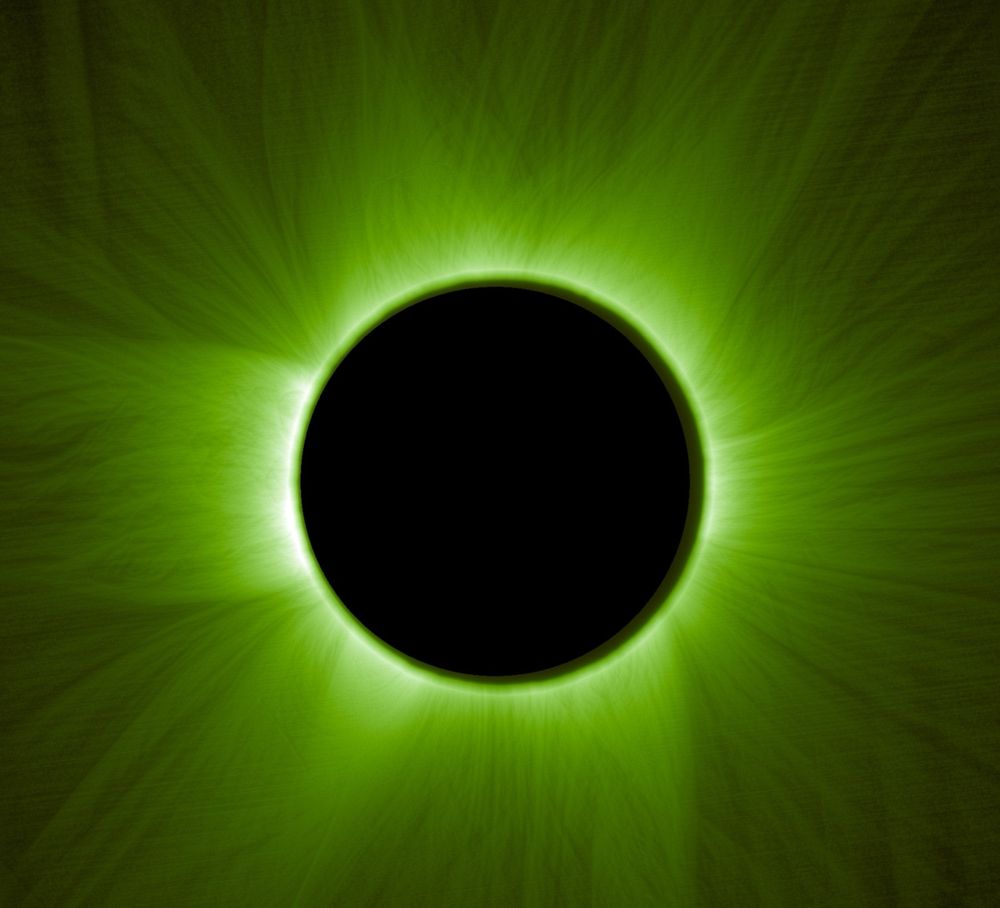
Breaking space news: We have made our own solar eclipse in space! 🌘
Today, we release the first images from our Proba-3 mission, which flies two spacecraft in precise formation to create artificial solar eclipses in orbit.
Learn more ➡️ www.esa.int/Enabling_Sup...
16.06.2025 14:30
👍 451
🔁 104
💬 7
📌 25
NIRCam Rogue Path Planning Tool for Avoiding "Claws” Artifacts
YouTube video by JWST Observer
Looking forward to JWST Cycle 5? Our latest video tutorial shows how to use the Rogue Path Tool to predict and avoid the dreaded "claws" in NIRCam observations.
🔭
28.05.2025 16:27
👍 5
🔁 1
💬 0
📌 0

Massive cuts to NASA science proposed in early White House budget plan
The preliminary version of President Donald Trump’s budget proposal to Congress, known as a “passback,” would cut the agency’s science budget funding nearly in half.
First the rumour was a 20% budget cut. Then, 50%. Now the president's NASA budget is out and it's a 68% cut to astrophysics ($1.5B to $487M).
Even if this gets reversed in four years, we will *never* recover the missions, partners, people who will be gone.
www.washingtonpost.com/science/2025...
11.04.2025 14:54
👍 762
🔁 393
💬 58
📌 78

A flat disk of a galaxy viewed nearly edge-on, appearing like a skinny, elongated ellipse. The disk is dominated by pale clouds, which are actually dust glowing in infrared light. A blue halo of stars concentrates near the center and dissipates as it extends outward, like particles evaporating out into space, though they are really just orbiting. The reddish dots and smudges of distant background galaxies speckle the image. Closer background galaxies look bluer. Some sharp points of light also signify foreground Milky Way stars. Upon closer inspection they look like flowers, due to the six-sided diffraction spikes imprinted by the optics of the telescope.
Here's an infrared Sombrero from J-Dub. Not new, just my own view on it. Part of a project to eventually combine imagery from various sources.
flic.kr/p/2qNgBrh
23.02.2025 04:29
👍 67
🔁 17
💬 0
📌 0

Energy megaproject in Chile threatens the world’s largest telescopes
Glare from proposed green hydrogen plant could degrade views of distant universe
Energy megaproject in Chile threatens the world’s largest telescopes
Glare from proposed green hydrogen plant could degrade views of distant universe.
www.science.org/content/arti... 🔭🧪
13.01.2025 11:21
👍 39
🔁 16
💬 1
📌 2


