CISAC Fellowship Program
cisac.fsi.stanford.edu/content/cisa... In my new role at @stanfordcisac.bsky.social, I'm recruiting for a postdoc to define how benefits of risky research should be evaluated. w Tony Mills of @notredame.bsky.social . #philsci #biosecurity #scipolicy
05.10.2025 23:25
👍 7
🔁 5
💬 0
📌 0
Key points: A popular "hazard difference" estimator for averted outcomes is biased, but an unbiased one can be calculated from status-based aggregated data (knowing y/n vaccinated for those with and without the outcome). For avertible outcomes, this doesn't work; need to know dates of vaccination.
09.09.2025 12:15
👍 1
🔁 0
💬 0
📌 0
There is surely some basic biology benefit to gain. But the 100s of millions spent were justified with pandemic prevention/response as part of it, and the vaccine part of that doesn't hold water.
26.08.2025 15:09
👍 2
🔁 0
💬 1
📌 0
The fact that WIV1 and HKU1 were used by Moderna doesn't mean that they were central to the science; I'm no patent expert but I guess patent applicants want to cover as many applications (eg viruses) as possible for commercial reasons. Unclear to me if using them fundamentally changed conclusions.
26.08.2025 15:08
👍 0
🔁 0
💬 1
📌 0
On the substance of your points, I am not sure about the "not dangerous because the worst viruses are already at the interface" -- depends if ecological encounter opportunities are rate-limiting, which I think we often don't know.
26.08.2025 15:05
👍 1
🔁 0
💬 1
📌 0
one argument supporting a type of research may be weak while another is stronger, or research may be both dangerous and useful (or safe and not useful) and taking points one at a time helps to keep the questions separate.
26.08.2025 15:04
👍 2
🔁 0
💬 1
📌 0
Thanks @acritschristoph.bsky.social for these thoughtful comments. Apart from space and time, one reason we didn't address the other arguments was that I think it's important to consider arguments separately to reduce pressure to form "sides" -- ...
26.08.2025 15:03
👍 1
🔁 0
💬 1
📌 0
There may be other justifications for the expense and risk incurred by such prospecting efforts, but vaccine development is not a strong one. Pathogen identification at the human interface (in spillover cases) and efforts to avoid or remediate human drivers of spillover risk may be more efficient.
25.08.2025 19:56
👍 3
🔁 0
💬 0
📌 0
For Marburg, a reservoir is known, but serious efforts at countermeasures have been spurred by human outbreaks.
We conclude that virus prospecting is neither necessary, sufficient, nor particularly feasible as a driver for medical countermeasure (at least vaccine) development.
25.08.2025 19:55
👍 1
🔁 0
💬 1
📌 0
Last, we take a look at detailed timelines of human and animal isolation of filoviruses (ebolavirus spp. and Marburg) and note that in ebolaviruses, animal reservoirs have not been confirmed but countermeasure development has followed large human outbreaks.
25.08.2025 19:54
👍 0
🔁 0
💬 1
📌 0
Then we identify the large number of targets for which vaccines are arguably more urgent than for any virus known only in non-human hosts: the 26 families of viruses known to infect humans. Among these, there are no vaccines approved for even a single member of 10 of the 26 families.
25.08.2025 19:52
👍 0
🔁 0
💬 1
📌 0
Then we note that most major virus outbreaks of the 21st century have been caused by viruses first discovered in humans. Next, we show that recent priority pathogen lists for countermeasure development have contained known human pathogens but shown little relationship to virus discovery in wildlife.
25.08.2025 19:50
👍 1
🔁 0
💬 1
📌 0
First we note that historically, finding a novel virus in animals before the first known human outbreak did not in any case spur countermeasure development. Poignant examples are Zika (1947 in animals, 1952 in humans, vaccines only much later) and monkeypox (1958-1970, vaccine R&D only recently).
25.08.2025 19:48
👍 0
🔁 0
💬 1
📌 0
In it we asked if prospecting for novel viruses in wildlife is justified, as often asserted, as a means to speeding the development of countermeasures against emerging infections. We find little evidence that it is.
25.08.2025 19:46
👍 3
🔁 1
💬 1
📌 0
Good to get them <65 in advance of Medicare denying payment for progressives
14.08.2025 12:07
👍 1
🔁 0
💬 0
📌 0

Sam Harris | #425 - Are We Prepared for the Next Pandemic?
Sam Harris speaks with Marc Lipsitch about pandemic preparedness.
Check out "Are We Prepared for the Next Pandemic?"- CCDD Director, @mlipsitch.bsky.social's conversation with Sam Harris, host of the Making Sense podcast. www.samharris.org/podcasts/mak...
21.07.2025 21:09
👍 5
🔁 3
💬 0
📌 0
Republicans, before you vote to close 1 of 4 nursing homes, can you update us on where those people will go?
Maybe call a few seniors in your state and go over plans for where they go next?
Or call the son whose dad has dementia and tell him how he can be a full-time caregiver?
29.06.2025 23:10
👍 2384
🔁 792
💬 87
📌 26

Linkage-based ortholog refinement in bacterial pangenomes with CLARC
Abstract. Bacterial genomes exhibit significant variation in gene content and sequence identity. Pangenome analyses explore this diversity by classifying g
New tool for pangenome analysis! CLARC refines bacterial gene clusters using functional annotation + linkage—not just sequence. New publication by @indragon.bsky.social & collaborators, advised by @mlipsitch.bsky.social & @billhanage.bsky.social. Read more at bit.ly/4ek0Y51
25.06.2025 16:05
👍 4
🔁 6
💬 0
📌 1
There is a link for non-NIH individuals to sign in support. Already several Nobelists and others have
09.06.2025 14:05
👍 0
🔁 0
💬 0
📌 0
Bethesda Declaration — STAND UP FOR SCIENCE
Support NIH Staff Now!
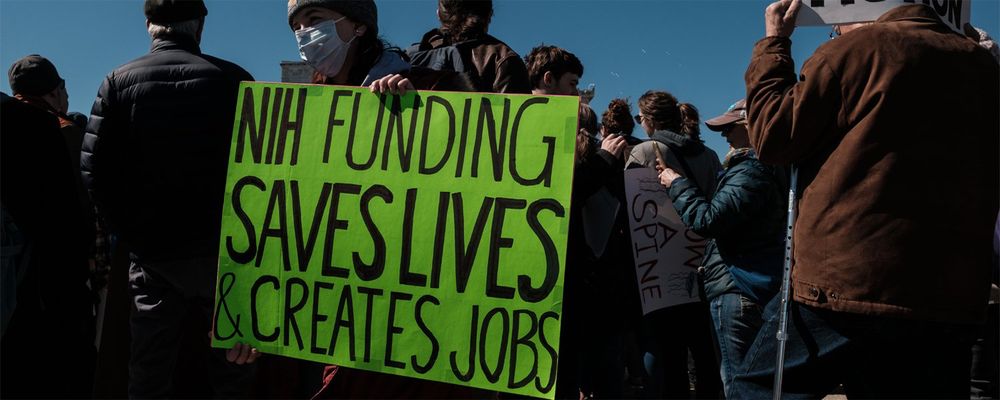
Remarkable open letter to the director from NIH staff on the health, financial,academic freedom, and other impacts of changes at the agency. www.standupforscience.net/bethesda-dec...
09.06.2025 14:03
👍 4
🔁 2
💬 1
📌 0
The goal is plainly and literally to cut the number of people involved in basic science in the US by 70%
30.05.2025 23:38
👍 419
🔁 196
💬 7
📌 11

Denying Visas to Chinese Students Could Backfire on America
"The policy’s narrow-mindedness will make America small again.”
I am simply at a loss to express how stupid this is.
www.nytimes.com/2025/05/30/b...
31.05.2025 01:22
👍 4
🔁 3
💬 1
📌 0

The C.D.C. Now Says Healthy Kids Don’t Need Covid Shots. Is That True?
Thanks Dani Blum @nytimes.com for breaking down the science on kids, pregnant people, and COVID shots www.nytimes.com/2025/05/27/w...
28.05.2025 00:57
👍 7
🔁 1
💬 1
📌 0