Tom Stafford's Avatar

Tom Stafford

@tomstafford.mastodon.online.ap.brid.gy

"A vast confusion of vows, wishes, actions, edicts, petitions, lawsuits, pleas, laws, proclamations, complaints, grievances, are daily brought to our ears. " [bridged from https://mastodon.online/@tomstafford on the fediverse by https://fed.brid.gy/ ]

1,197
Followers
21
Following
757
Posts
27.08.2024
Joined
Posts Following

Latest posts by Tom Stafford @tomstafford.mastodon.online.ap.brid.gy

photo from groundlevel of a small pong. Many frogs can be seen in the water

photo from groundlevel of a small pong. Many frogs can be seen in the water

Morning

#PondLife #Sheffield #Frogs

07.03.2026 09:55 πŸ‘ 2 πŸ” 1 πŸ’¬ 0 πŸ“Œ 0
Original post on mastodon.online

Pair with Kevin Munger:

https://kevinmunger.substack.com/p/things-will-have-to-change

"So, yes, the current situation with journals publishing static pdfs is indefensibly antiquated. But the current academic polyarchy is actually quite robust; the sluggishness, the institutional conservativism […]

06.03.2026 08:18 πŸ‘ 0 πŸ” 1 πŸ’¬ 0 πŸ“Œ 0
Preview
No AI Was Used in the Writing of This Review (Unfortunately) Why the academic obsession with human-only peer review protects bias, inconsistency, and anonymous reviewer soapboxes

Matt Grawitch sketches what a peer review system which embraces AI would look like

https://mattgrawitch.substack.com/p/no-ai-was-used-in-the-writing-of

"Why the academic obsession with human-only peer review protects bias, inconsistency, and anonymous reviewer soapboxes"

06.03.2026 06:26 πŸ‘ 3 πŸ” 3 πŸ’¬ 0 πŸ“Œ 0
Preview
Can AI Replace Social Science Researchers? No. No it can't. Come on, now.

Here's @davekarpf lucid on AI and research.

AI kills the paper and good riddance

https://davekarpf.beehiiv.com/p/can-ai-replace-social-science-researchers

06.03.2026 06:14 πŸ‘ 3 πŸ” 4 πŸ’¬ 2 πŸ“Œ 0

Getting a complex revise and resubmit is like getting assigned to a murder trial. You call work: "Sorry, I'm out for the rest of the year"

05.03.2026 10:54 πŸ‘ 1 πŸ” 0 πŸ’¬ 0 πŸ“Œ 0

Reviewing should be like jury service. You have a chance of being randomly selected, then the funder or journal calls up your institution and they have to give you two weeks off, or whatever, and you bash out as many reviews as you can in that time

#AcademicChatter

05.03.2026 10:53 πŸ‘ 4 πŸ” 6 πŸ’¬ 3 πŸ“Œ 0

A large-scale randomized study of large language model feedback in peer review: www.nature.com/articles/s42...

RCT w/ 20k reviews shows that 27% of reviewers who received feedback from AI updated their reviews, and blinded eval confirmed revised feedback was more informative.

24.02.2026 09:30 πŸ‘ 1 πŸ” 2 πŸ’¬ 0 πŸ“Œ 0
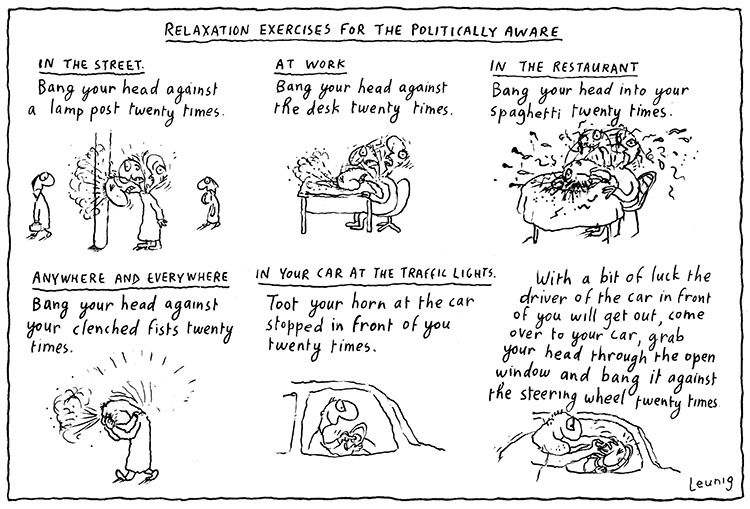
Cartoon:: a chaotic mess

Cartoon:: a chaotic mess

Here's the plan

(Michael Leunig, https://www.leunig.com.au/)

29.06.2025 20:34 πŸ‘ 6 πŸ” 3 πŸ’¬ 1 πŸ“Œ 0
Post image

@drjennings.bsky.social alternatively
02.03.2026 13:00 πŸ‘ 0 πŸ” 0 πŸ’¬ 0 πŸ“Œ 0
Post image

@drjennings.bsky.social

02.03.2026 12:59 πŸ‘ 0 πŸ” 0 πŸ’¬ 0 πŸ“Œ 0
A table of 18 types of "Disagreement Strategy," with a tag for each strategy in square brackets next to its name, and a text description of each strategy. The strategies, which are arranged in two columns with green, yellow, orange, and red color bars, include Complex Counter Argument [CCA], Dismantle [DIS], Softened Counter Argument [SCA], Regular Counter Argument [RCA], Critical Question [CQ], Invitation For Cooperation [IFC], Playing On Emotions [POE], Joking [JOK], Reasoned Direct Denial [RDD], Proposing Alternative [PRA], Deafening Silence [DES], Agree to Disagree [ATD], Breakdown of Dialogicity [BOD], Unreasoned Direct Denial [UDD], Ordering [ORD], Irrelevancy Claims [IRC], Ironic Echoing [IRE], and Blatant or Aggressive Denial [BAD].

A table of 18 types of "Disagreement Strategy," with a tag for each strategy in square brackets next to its name, and a text description of each strategy. The strategies, which are arranged in two columns with green, yellow, orange, and red color bars, include Complex Counter Argument [CCA], Dismantle [DIS], Softened Counter Argument [SCA], Regular Counter Argument [RCA], Critical Question [CQ], Invitation For Cooperation [IFC], Playing On Emotions [POE], Joking [JOK], Reasoned Direct Denial [RDD], Proposing Alternative [PRA], Deafening Silence [DES], Agree to Disagree [ATD], Breakdown of Dialogicity [BOD], Unreasoned Direct Denial [UDD], Ordering [ORD], Irrelevancy Claims [IRC], Ironic Echoing [IRE], and Blatant or Aggressive Denial [BAD].

The Hierarchical Taxonomy of Disagreement Strategies (HiTODS)

https://doi.org/10.1016/j.edurev.2026.100769

02.03.2026 12:38 πŸ‘ 34 πŸ” 11 πŸ’¬ 1 πŸ“Œ 1
Original post on mastodon.online

What's a multiverse good for anyway?

https://osf.io/preprints/psyarxiv/37g29_v1

"We discuss various ways in which a multiverse may be employed – as a tool for reflection and critique, as a persuasive tool, as a serious inferential tool ...it fails as a persuasive tool when researchers disagree […]

02.03.2026 11:53 πŸ‘ 0 πŸ” 1 πŸ’¬ 0 πŸ“Œ 0
Original post on mastodon.online

Hyperactive Minority Alter the Stability of Community Notes

https://arxiv.org/abs/2602.08970

"[We] conduct counterfactual simulations that modify the display status of notes by varying the pool of raters. Our results reveal that the system is structurally unstable: the emergence and visibility […]

02.03.2026 11:50 πŸ‘ 0 πŸ” 1 πŸ’¬ 0 πŸ“Œ 0
This image is a statistical box plot that visualizes how different factors contribute to the variance of treatment t-statistics across various outcomes.

Title: Distribution of $\eta^2$ components across outcomes (t-statistics).

Y-Axis: Represents $\eta^2$ (eta-squared), ranging from 0.00 to 1.00, which measures the proportion of variance explained. 

X-Axis: Categorizes the variance into four components: Outlier, Missing, Transform, and Residual.

This order is also the largest to smallest ordering

This image is a statistical box plot that visualizes how different factors contribute to the variance of treatment t-statistics across various outcomes. Title: Distribution of $\eta^2$ components across outcomes (t-statistics). Y-Axis: Represents $\eta^2$ (eta-squared), ranging from 0.00 to 1.00, which measures the proportion of variance explained. X-Axis: Categorizes the variance into four components: Outlier, Missing, Transform, and Residual. This order is also the largest to smallest ordering

Results from Randomized Controlled Trials are Highly Sensitive to Data Preprocessing Decisions: A Multiverse Analysis of 97 Outcomes

https://osf.io/preprints/metaarxiv/kbgc2_v2

This is nice: take open data from RCTs, and show how defensible preprocessing […]

[Original post on mastodon.online]

02.03.2026 11:11 πŸ‘ 2 πŸ” 2 πŸ’¬ 0 πŸ“Œ 0
Original post on mastodon.online

Of note

https://minutes.substack.com/p/rented-virtue

"The work that lasts from this era will be no different. The companies that endure, the technologies that serve rather than consume, the institutions that hold their shape across generations when the founders are dead and the capital is […]

02.03.2026 07:30 πŸ‘ 0 πŸ” 1 πŸ’¬ 0 πŸ“Œ 0
Original post on mastodon.online

Sound the nerd victory klaxon!

Tax nerd throws life savings at prediction markets, after realising he could take the opposite side of bets by Musk fans. DOGE, inevitability, fails to decrease year on year federal spending. He wins big […]

01.03.2026 07:31 πŸ‘ 1 πŸ” 1 πŸ’¬ 0 πŸ“Œ 0
Original post on mastodon.online

Following up for this, I've written a longer piece for the new @RoRInstitute #Metascience substack

https://researchonresearchinstitute.substack.com/p/the-point-of-no-return

My minimal claim is that, contra Schweiger, it is very hard to definitely claim any scheme a waste of time and money […]

27.02.2026 08:25 πŸ‘ 1 πŸ” 1 πŸ’¬ 0 πŸ“Œ 0
Preview
Specifically right, generally wrong Have I stumbled upon a dark pattern for generating engagement?

New newsletter!

https://tomstafford.substack.com/p/specifically-right-generally-wrong

on reactions I had to the most controversial piece I've written for a while

28.02.2026 08:15 πŸ‘ 0 πŸ” 1 πŸ’¬ 0 πŸ“Œ 0
Photo of a book

White Moss by Anna Nerkagi

A silhouetted figure rides a sleigh in the arctic tundra

Photo of a book White Moss by Anna Nerkagi A silhouetted figure rides a sleigh in the arctic tundra

Recommend

27.02.2026 20:25 πŸ‘ 3 πŸ” 1 πŸ’¬ 0 πŸ“Œ 0

@drjennings.bsky.social sure to be an attractive prospect for billionaire philanthropic dollar "For too long research has been held back by the inefficiency of having to conduct ethical studies..something something disruption ...something something red tape"

27.02.2026 19:56 πŸ‘ 2 πŸ” 0 πŸ’¬ 1 πŸ“Œ 0
Original post on mastodon.online

I've just an idea for a crazily unethical experiment:

- pick ~20 minor celebrities
- randomise into two halves
- half you leave alone
- half, you buy a bot army which responds with enthusiastic endorsement whenever they say anything edgy, conspiratorial or political on social media
- come back […]

27.02.2026 19:52 πŸ‘ 3 πŸ” 1 πŸ’¬ 1 πŸ“Œ 0
Original post on mastodon.online

Following up for this, I've written a longer piece for the new @RoRInstitute #Metascience substack

https://researchonresearchinstitute.substack.com/p/the-point-of-no-return

My minimal claim is that, contra Schweiger, it is very hard to definitely claim any scheme a waste of time and money […]

27.02.2026 08:25 πŸ‘ 1 πŸ” 1 πŸ’¬ 0 πŸ“Œ 0
Video thumbnail

Life is pain, Highness.

#PrincessBride

27.02.2026 02:02 πŸ‘ 0 πŸ” 1 πŸ’¬ 0 πŸ“Œ 0

@jamesjefferies organising often a thankless task. But you make the world go round

26.02.2026 19:05 πŸ‘ 0 πŸ” 0 πŸ’¬ 0 πŸ“Œ 0
Post image

LLMs should be a private cognitive tool, like a calculator, which is not currently possible under our existing model of corporate AI. Crucially, they do not think and have no agency, again in the same way as a calculator

26.02.2026 09:45 πŸ‘ 33 πŸ” 5 πŸ’¬ 3 πŸ“Œ 3
Where should SocArXiv draw the AIΒ line? _Ducks swimming right, Geese swimming left. (PNC photo)_ Someone submitted a paper to SocArXiv that we would have accepted a few years ago. By our moderation policy, we apply only a very minimal quality standard. In addition to required structural elements β€” like an abstract, cited references, a title that reflects the content, ORCID, etc. β€” we sometimes reject papers that don’t surpass β€œa minimal standard of informative value.” But this paper would have passed it. It was boring, unoriginal, and superficial. Its literature review was deficient. What it claimed as an original theoretical insight was not interesting. It had some complex statistical models, apparently done competently, and graphical as well as tabular results. The citations and in-text quotations appeared to be real. As a whole, it was coherent and relevant to existing research. At the end of the paper the author included an β€œAI disclosure.” They listed several AI tools used to generate code, conduct the literature search, β€œconsult” on statistics, and draft the text β€” they admitted that almost all of the text was generated by these tools. But the author claimed to have formulated the research question, divined the theoretical framework, chosen variables and model specification, β€œdirected analytical decisions,” interpreted the results, and verified every data claim, as well as every citation and quotation. They also shared the statistical code in a public repository, and offered an AI methodology audit on request. In other words, to reject this paper, we would have to do it based on the nature and extent of the AI tools. As we attempt to formulate a policy for this, I find this case interesting. I have my own biases. If you told me your only use of AI was to generate your statistical code, I think I would accept your paper (especially if you shared the code). Likewise if you had used AI tools to conduct categorical coding of qualitative data, provided it was human directed and verified. Also, if you told me you only used AI tools to help with writing β€” fixing style and grammar, language translation, helping to come up with a title or abstract β€” I think I would accept the paper. And if you told me you used AI to help with your literature search, such as by conducting natural language queries, I think I would accept the paper. But all of these, and writing the first draft, too? So this paper stands out for using AI tools to do all of this, plus drafting the original text. One clear position is that using such tools at all is unethical. The models all use people’s work without attribution. I am not persuaded by this, because I think all knowledge is learned from someone else. We have norms for attribution which are partly about ethics, and partly about validity, but there is no standard that says everything you read must be cited. However, these norms are complicated and subject to adaptation, so I don’t rule out changing my mind. On legality, I think AI training models in principle may be practicing fair use. But it would be a copyright violation if their outputs end up displacing income from the original producers, however β€” as seems to be the case for news organizations whose content is served to chatbot subscribers. Obviously, I’m not expert on the legal issues, but I’m also not in charge of enforcing copyright law. Another argument is that platforms like SocArXiv need to defend the scholarly ecosystem from slipping into a self-referencing death spiral of AI slop research generated from AI slop ad infinitum. This might especially be the case for a platform like ours, which accepts work without peer review but assigns DOIs and other trappings of scholarly legitimacy. If you are building a training model to write social science papers, SocArXiv papers would seem to be an attractive (free) target for harvesting. On the other hand, if we attempt to ban AI-generated research β€” or even work with limited AI-generated components β€” we will be entering an endless arms race that we will ultimately lose. In the process, we will spend all our money and time trying to defeat global monopoly powers instead of helping real researchers archive and disseminate their research, which is our mission. And β€” as I remind people as often as I can β€” no one should be looking at the corpus of SocArXiv work as a repository of the best research in any field. Most humans come to us with a specific link to a paper, or an author, and get what they need. There is a lot of bad work on our platform β€” which, unlike most journals and even some preprint servers, we are not shy about admitting β€” because it doesn’t hurt the good work that is here, and we’re not trying to make money at this. Unless we get so overwhelmed with slop that we can’t maintain the service, I think that if it’s easier to accept bad work than it is to reject it, accepting it might be the more practical course. Even a requirement like author disclosure of AI tool use could be crippling, because we don’t have the resources to verify claims, or sleuth out people who make false claims or deny using chatbots when they actually do, and so on. ChatGPT et al. read the rules we write, and will happily help authors pretend to comply with them. Again, arms race. We have been discussing this at SocArXiv, but have not finalized our policy. When we do, I will link it here. In the meantime, we welcome your feedback, ideas, and suggestions β€” in the comments, or in email to socarxiv@gmail.com, or any other (peaceful) way. (Human-generated, please.) I would especially appreciate discussion that recognizes there are good people with different perspectives and experience, and it would be great if we could find a way to work together. _–Philip N. Cohen_ ### Share this: * Tweet * * Share on Reddit (Opens in new window) Reddit * More * * * Like Loading...

Some useful thinking out loud from @philipncohen on developing moderation rules to cope with AI generated content submitted to SocArxiv

https://socopen.org/2026/02/22/where-should-socarxiv-draw-the-ai-line/

25.02.2026 10:59 πŸ‘ 0 πŸ” 1 πŸ’¬ 0 πŸ“Œ 0
Preview
Go Meta! News and Views from RoRI | Research on Research Institute | Substack By the Research on Research Institute (RoRI). We publish timely essays, reflections and signals from across metascience, research policy and reform. Expect original thinking, reactions to live debates, and practical insights from people studying research. Click to read Go Meta! News and Views from RoRI, by Research on Research Institute, a Substack publication with thousands of subscribers.

New substack from @RoRInstitute

https://researchonresearchinstitute.substack.com

#MetaScience

24.02.2026 14:40 πŸ‘ 0 πŸ” 1 πŸ’¬ 0 πŸ“Œ 0
A heatmap with various model names for each row (Gemini Pro 3, Gemini Flash 3 etc etc on to Claude Opus 4.6) and most of the rows are coloured dark or light green (which is good)

A heatmap with various model names for each row (Gemini Pro 3, Gemini Flash 3 etc etc on to Claude Opus 4.6) and most of the rows are coloured dark or light green (which is good)

Same Prompt, Different Outcomes: Evaluating the Reproducibility of Data Analysis by LLMs

https://arxiv.org/abs/2602.14349

Eyeballing figure 1 the ability and consistency of LLMs for data analysis looks ... pretty good. Better than humans?

24.02.2026 06:48 πŸ‘ 4 πŸ” 0 πŸ’¬ 0 πŸ“Œ 0
Original post on mastodon.online

Metascience seminar 1: Improve our inferences from observational studies

https://events.humanitix.com/metascience-seminar-1-harrison-hansford

The event is free for all.

Date and time: March 12 at 11AM (GMT + 11; Sydney, Melbourne, Canberra time)

Speaker: Harrison Hansford

#MetaScience […]

24.02.2026 06:39 πŸ‘ 2 πŸ” 0 πŸ’¬ 0 πŸ“Œ 0
Preview
Trials and tribulations of responsible people trying to uphold scientific standards - Research Integrity and Peer Review Scientific misconduct threatens patient safety, progress, and trust in medicine. On October 3, 2020, Frass and colleagues published a randomized, placebo-controlled, double-blind trial in The Oncologist (published by Wiley at the time) claiming that add-on homeopathy significantly prolonged survival in advanced non-small-cell lung cancer. Since homeopathy contradicts established scientific principles, doubts about the trial’s validity quickly emerged. Concerns were first published in October 2020, followed in 2021 by a detailed analysis alleging scientific misconduct. This prompted the Medical University of Vienna, the affiliation of the study's lead author, to request an investigation by the Austrian Agency for Research Integrity (OeAWI). After conducting an in-depth review, OeAWI concluded in September 2022 with a clear recommendation for retraction. However, The Oncologist issued only an β€˜Expression of Concern’ at the time, despite five co-authors formally requesting the withdrawal of their authorshipβ€” a demand that remained unaddressed as of November 2025. Repeated inquiries to the journal and its publisher, Oxford University Press (OUP), yielded only vague assurances that the matter was β€œunder review,” with multiple deadlines passing without resolution. Finally, by November 24, 2025, The Oncologist retracted the paper. However, the retraction notice fails to address the specific concerns raised about the study’s results and conclusions, nor does it provide a clear rationale for the retraction itself.Meanwhile, the paper has been cited more than 60 times (according to Google Scholar) and is widely circulated online as β€œproof” that homeopathy benefits cancer patients. This highlights the harmful consequences of delayed editorial action. According to COPE guidelines, misconduct must be dealt with swiftly and transparently. Our case reveals the opposite: incomplete corrections, prolonged inaction, and even the defense of implausible claims. Against the backdrop of increasing organized scientific fraud, this experience underscores the urgent responsibility of journals and publishers to protect the scientific record and prevent harm to patients.

"Since homeopathy contradicts established scientific principles, doubts about the trial’s validity quickly emerged."

I feel like the homeopathy-reproducibility beat is a bit like shooting fish in a barrel https://link.springer.com/article/10.1186/s41073-026-00191-5

24.02.2026 06:20 πŸ‘ 1 πŸ” 0 πŸ’¬ 0 πŸ“Œ 0