

On average, 15% of workers across America’s biggest cities toil at home on most working days. In some places the share is close to a quarter
03.12.2025 04:00
👍 9
🔁 6
💬 4
📌 0
On average, 15% of workers across America’s biggest cities toil at home on most working days. In some places the share is close to a quarter
For a dose of optimism, read Archie's excellent cover package on why Britain's bargain sales pitch might be one of its biggest strengths

We're hiring an intern to write about Britain—do apply! (We treat interns as regular writers, pretty much from day one.)
www.economist.com/britain/202...

We’re looking for someone who can analyse the performance of our journalism and translate complex data into clear, jargon-free insights that support editorial decision-making. Apply by July 13th
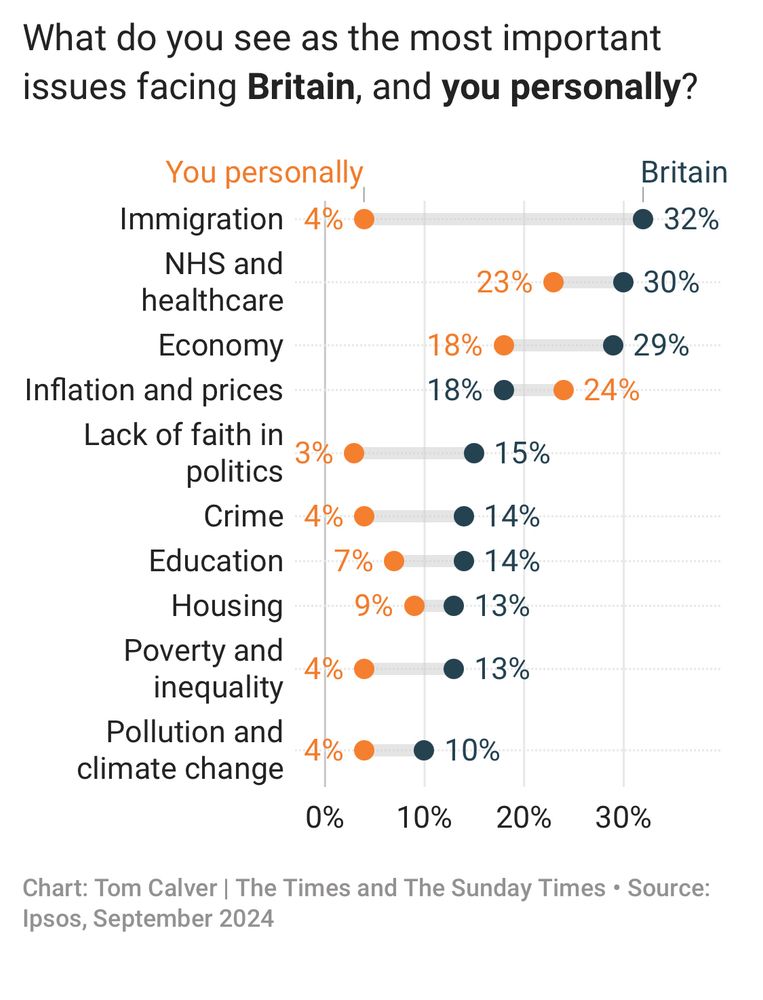
Interesting in this chart from @tomcalver.bsky.social that many issues people think are important for Britain more than for them personally. The only exception is inflation/prices which 24% rate as important for them personally but only 18% for Britain
www.thetimes.com/article/33c0...

For our latest issue, I visited the newly restored Palazzo Serristori in Tuscany to understand why Britain's ultra-rich are swapping Fitzrovia for Florence. Wealthy people are often accused of crying wolf about tax changes. This time feels different.
www.economist.com/britain/2025...


Essential stuff from @matthewholehouse.bsky.social on the “migration theory of everything”.
www.economist.com/britain/2025...

For decades the path to a nice life was clear: go to university, find a graduate job, then watch the money come in. Today’s hard-working youths, however, seem to be having a tough time https://econ.trib.al/jw2QMqO
I remember the Economist cover on gendercide a decade or so ago (which is mentioned in the story). It’s such a remarkable turnaround.
Before the weekend is out, do read @vinjeru.bsky.social‘s cover story on the girl preference.
Fascinating in every way.
Thank you @hetanshah.bsky.social!

Interesting development.
The stunning decline of the preference for having boys
economist.com/leaders/2025...
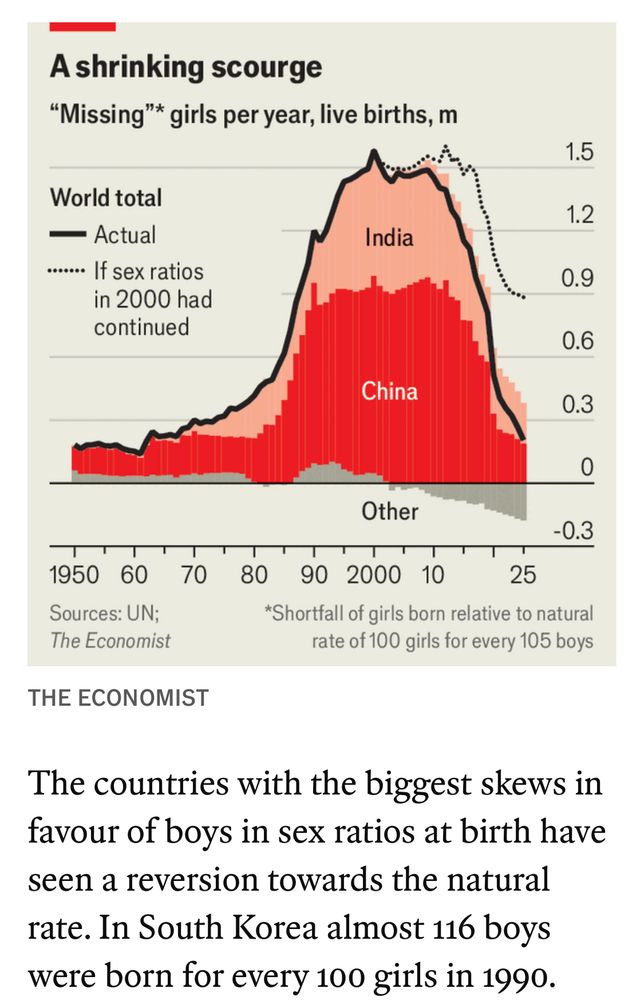
Graph showing the reduction of ‘missing girls’ per year The countries with the biggest skews in favour of boys in sex ratios at birth have seen a reversion towards the natural rate. In South Korea almost 116 boys were born for every 100 girls in 1990.
Really great that @economist.com used their cover story this week to revisit their 2010 cover story on ‘gendercide’. The practice of aborting girls for just being girls is not over, but has reduced significantly
economist.com/leaders/2025...
My cover story this week is on a fascinating global shift: the diminishing preference for baby boys around the world - and the first inklings of a bias towards girls. I'd love for you to read it.
www.economist.com/briefing/202...