So glad we could help! Good luck with the grant.
26.02.2026 16:57
👍 1
🔁 0
💬 0
📌 0
So glad we could help! Good luck with the grant.

And thanks to the reviewers and editors who helped us make the paper better 🙏
Special thanks to all the contributors: Melissa Malvaez, Nick Griffin, Andrea Suarez, Kathia Ramirez, and @seanostlund.bsky.social
That meeting alert signaling high snack probability triggers a lot of dopamine and this causes you to go straight to collect the expected treat.
The alert signaling low snack probability triggers less dopamine and this causes you to seek out snack before the meeting.
Cue-evoked accumbens dopamine supports high imminent reward prediction to constrain instrumental reward seeking in favor of checking for the highly predicted reward.
But it makes sense when you consider that reward predictions doesn’t just motivate us, it shapes how motivation is translated into action.

This was a bit surprising because we tend to think that dopamine promotes reward seeking.
Correspondingly, we found that inhibiting cue-evoked dopamine caused *more* instrumental reward seeking. It also reduced checking for the expected reward.
Then we found that cue-evoked dopamine inversely related to instrumental reward seeking.
More dopamine ➡️ *less* instrumental reward seeking.
Less dopamine ➡️ *more* instrumental reward seeking.

First, we found that cue-evoked dopamine release in the nucleus accumbens is positively shaped by reward prediction.
Stronger reward probability ➡️ more dopamine.
Thus, we use environmental reward-predictive cues to predict reward likelihood and, thereby, choose the most adaptive reward-pursuit strategy.
Our collaborator @seanostlund.bsky.social reviews this nicely here: psycnet.apa.org/record/2021-...
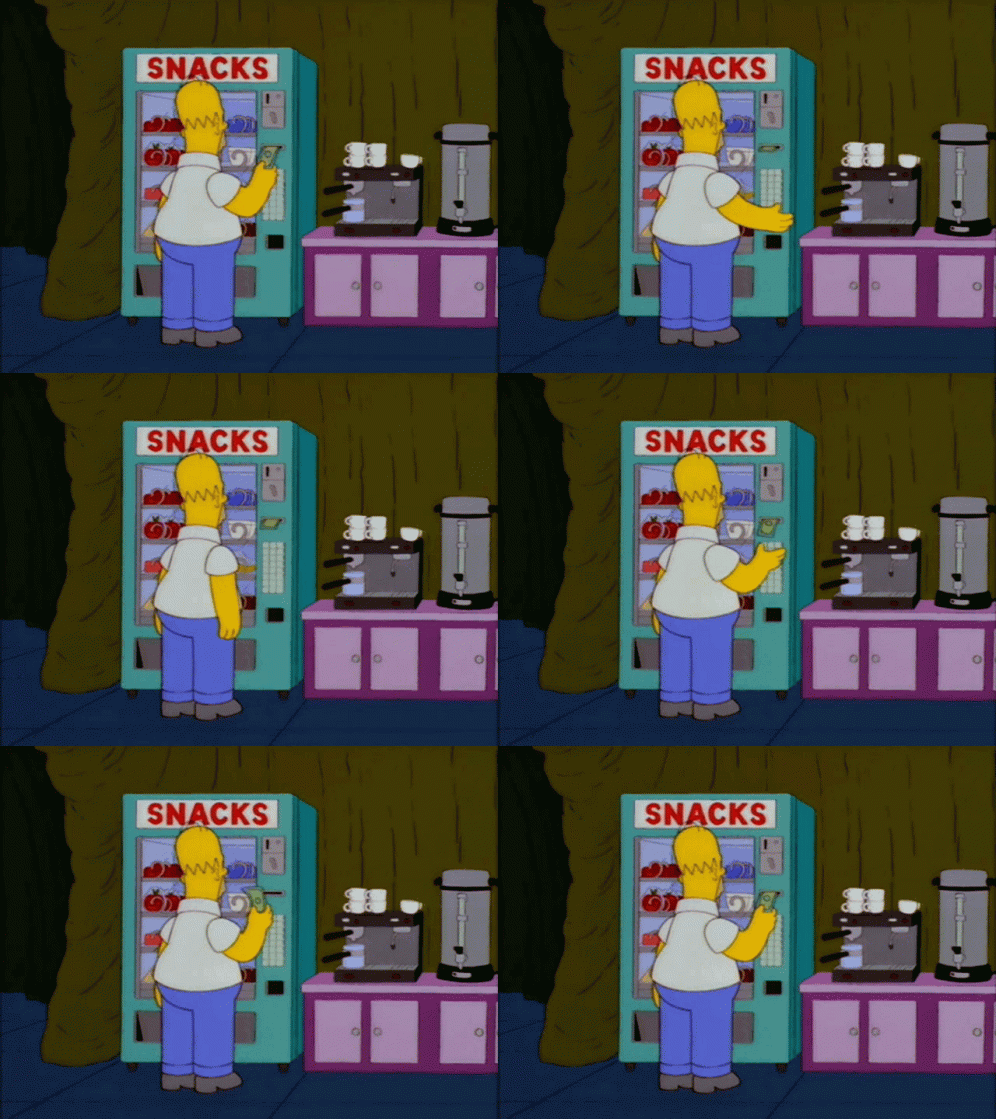
If you know, snacks are only served sporadically, the alert will serve as a low-probability food cue, and you’ll swing by a vending machine to seek sustenance before the meeting.
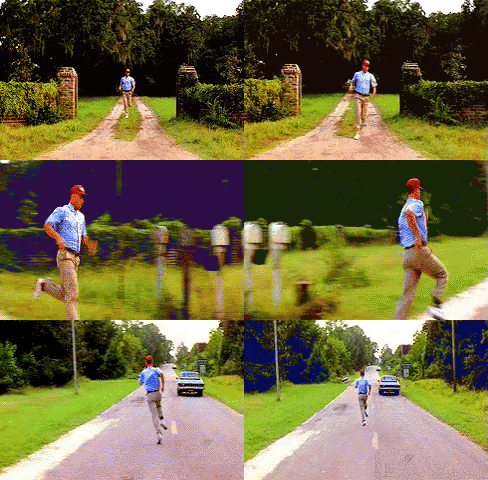
If you’ve learned that meeting always has snacks, that alert will serve as a high-probability food cue and you’ll head straight to the meeting room to collect your treat 🍩.

An alert pops up on your phone telling you a seminar is starting in 5 min.
You’re hungry. What do you do? 😬
Should you head straight to the seminar, or seek out a snack first?
It depends…

🚨📃New Wassum Lab Paper 📃🚨
Out today, Melissa Malvaez, Nick Griffin, Andrea Suarez & team discovered that dopamine can enable reward predictions to shape how we pursue reward.
Surprisingly, we find that dopamine can constrain instrumental reward seeking.
www.jneurosci.org/content/46/8...
🧵👇🏻

Photo of a lab group smiling in front of a fountain at UCLA
We’re hiring a technician!!
We’re an inclusive team of behavioral neuroscientists trying to discover the brain circuits of learning, decision making, and habit. More info👇
wassumlab.psych.ucla.edu/join-the-lab/
Job posting:
jobs.ucla.edu/jobs/8968
This is super cool!! Excited to hear more about it.

Winter Conference on Brain Research January 24th to 29th 2026 Big Sky Montana!
Submissions for #WCBR2026 open today! Please go to www.winterbrain.org Big Sky is my absolute favorite venue for this meeting. The science is top notch, the people are great, the meaning is inclusive, and I learned to ski as a 35 year old! Please repost!
Cool stuff, Ben!! Congrats to you & the team!
👀 awesome!! Congrats. Excited to dig into this.
Thanks!!!!
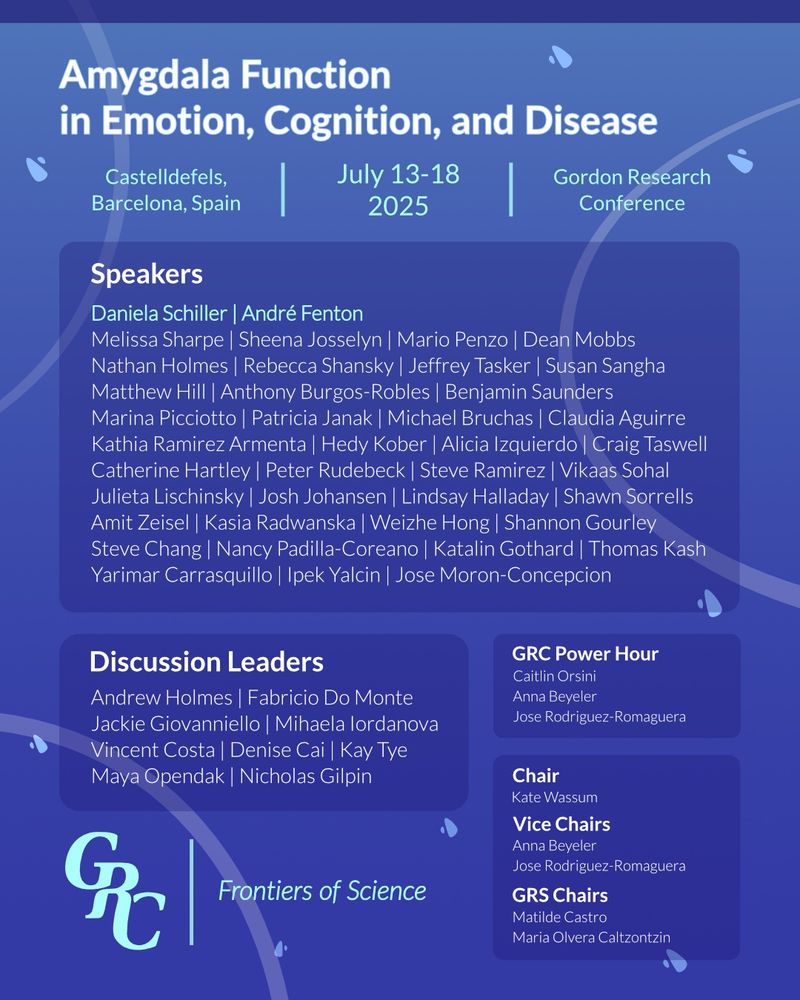
Calling all amygdaloids!!! The #AmygdalaGRC is coming up this summer in Barcelona.
We’ve got talks, posters, networking, power hour, and tons of fun planned.
👀 the program 👇🏻
We’re accepting folks on a rolling basis, apply soon to make sure you get a spot: www.grc.org/amygdala-fun...
Thanks!!

New preprint! We untangle glutamatergic and dopaminergic subpopulations in the ventral tegmental area. Long thread incoming, buckle up friends. 1/n
www.biorxiv.org/content/10.1...
HEY SOCAL & LA FRIENDS!
We’ve gotten a TON of questions about how to get involved in SoCal/LA—and here’s the answer! ☀️🌎⬇️
Spread the word & tag someone in LA that should check it out!
Thx 😊

Scientists have found two ‘dials’ in the brain that help to explain how chronic stress hijacks decision-making
https://go.nature.com/41nrC88