
I‘ve made a lot for PyBLP. The main challenge (still with CC) is having a tight tolerance for recovering the true parameters usually requires a test that takes a while to run.
20.01.2026 15:57
👍 2
🔁 0
💬 0
📌 0
I‘ve made a lot for PyBLP. The main challenge (still with CC) is having a tight tolerance for recovering the true parameters usually requires a test that takes a while to run.

For a sense of what I'll be covering, check out the open source course materials. Problem sets quickly get you working with my and @cconlon.bsky.social’s PyBLP.
GitHub: github.com/Mixtape-Sess...

Next week, I'm teaching another round of my online Mixtape course on BLP-style demand estimation!
The sessions are hands-on and last time we had a ton of great questions. Sign up here: www.mixtapesessions.io/session/dema...
Giulia Brancaccio and I are looking for a pre-doc to work with us on topics related to Industrial Organization and Trade
@nyu.edu
Ideally for two years starting in September
apply.interfolio.com/165860
#EconSky #EconRA
Thanks Jeff!
Thanks!!
Thanks Jake :)
Likewise!!
Thanks Steve!
My job market's done, and I'm heading back to the NYC area! Excited to join Princeton Econ as a postdoc next year and NYU Stern Econ as an AP in 2026.
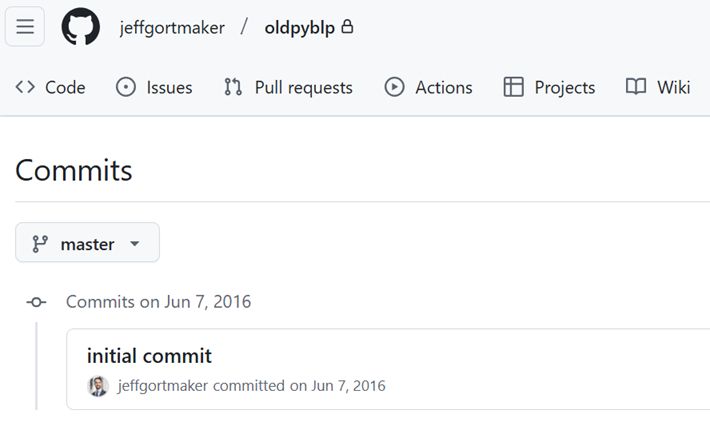
In a happy twist of fate, this means @cconlon.bsky.social and I will be colleagues exactly 10 years after our first PyBLP commit:
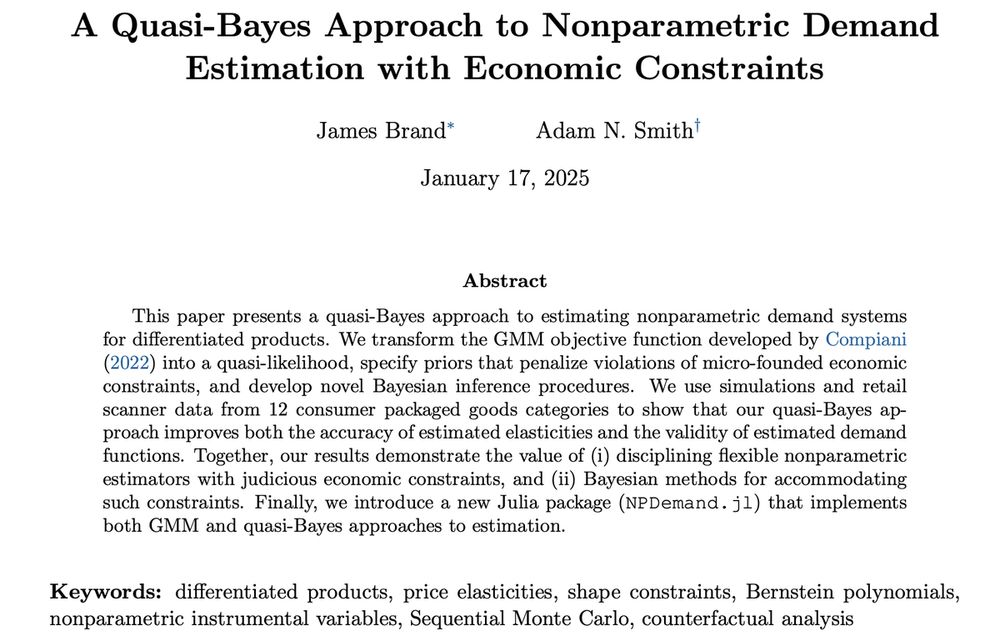
New paper with @adam-n-smith.bsky.social
papers.ssrn.com/sol3/papers....
Our paper develops a new approach for estimating demand nonparametrically while imposing economic constraints and comes with a new package, NPDemand.jl! Some things we do in the paper 1/

8/6 Oh and for anyone interested in a thread on the actual paper, #EconSky wasn't as much of a thing last year but here's my twitter thread: twitter.com/jeff_gortmak...
7/6 Also: I'm on the job market! If you're interested in the economics of (industrial policy for) open source or want to see a (very simple) example of PyBLP-powered micro BLP in action, check out my job market paper: bsky.app/profile/jeff...
6/6 All this to say: if you're doing methods research, there are some clear private benefits that can come jointly with doing open source work (impact, transparency, networking, etc.) but also others that could be more surprising.
5/6 Having an open source package lets you show students exactly how the method works with real-time examples. I used PyBLP to teach one of @causalinf.bsky.social @kylefbutts.bsky.social's Mixtape sessions (github.com/Mixtape-Sess...), which would have been far less accessible without it.
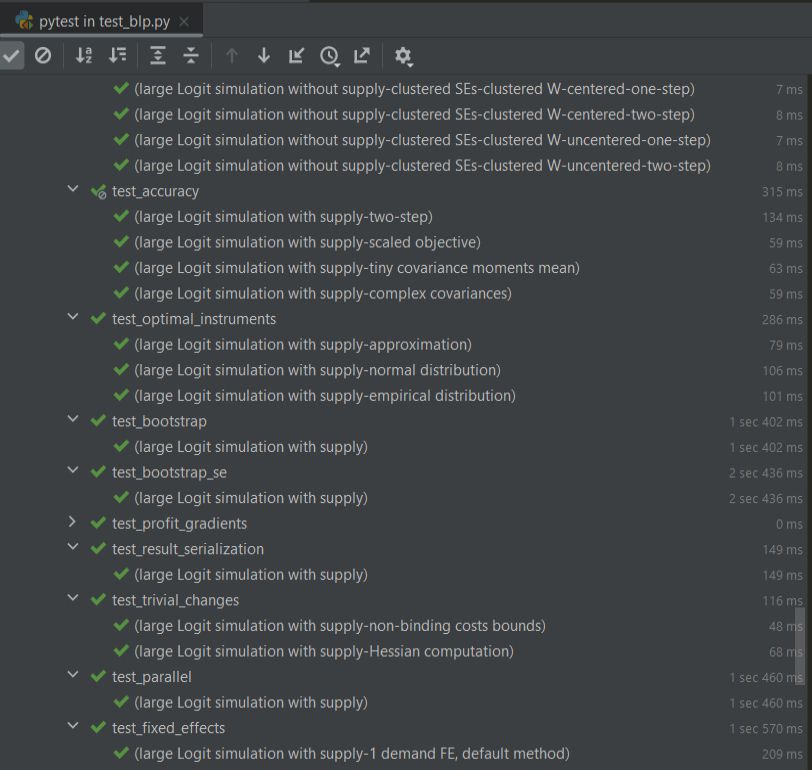
4/6 When others rely on your code, you write more tests, which can benefit your (future) self. For every PyBLP version, I run ~2k tests across ~50 functions. These made it easy to broaden the scope of our papers by adding new simulations and empirical examples with confidence.
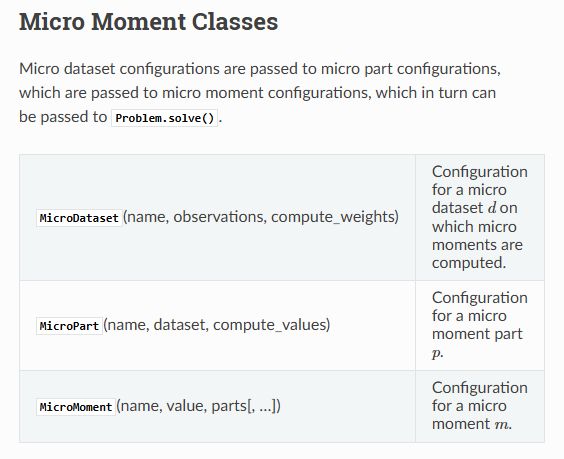
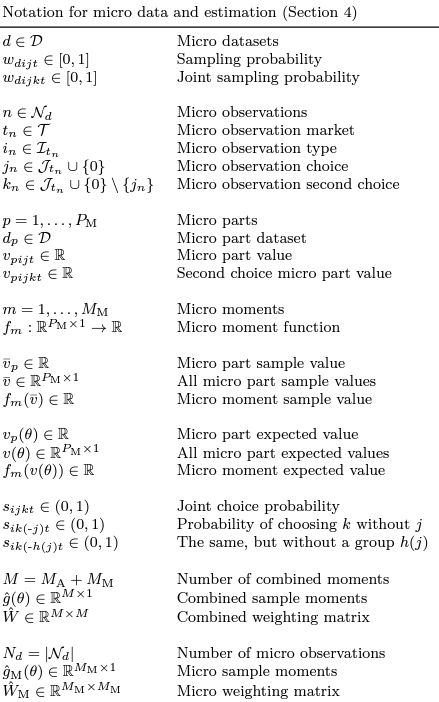
3/6 For micro BLP, I spent time iterating on PyBLP's interface to balance usability and flexibility. Feedback from users helped improve my design, which mapped directly into our standardized econometric framework, a key contribution of the 2nd paper.
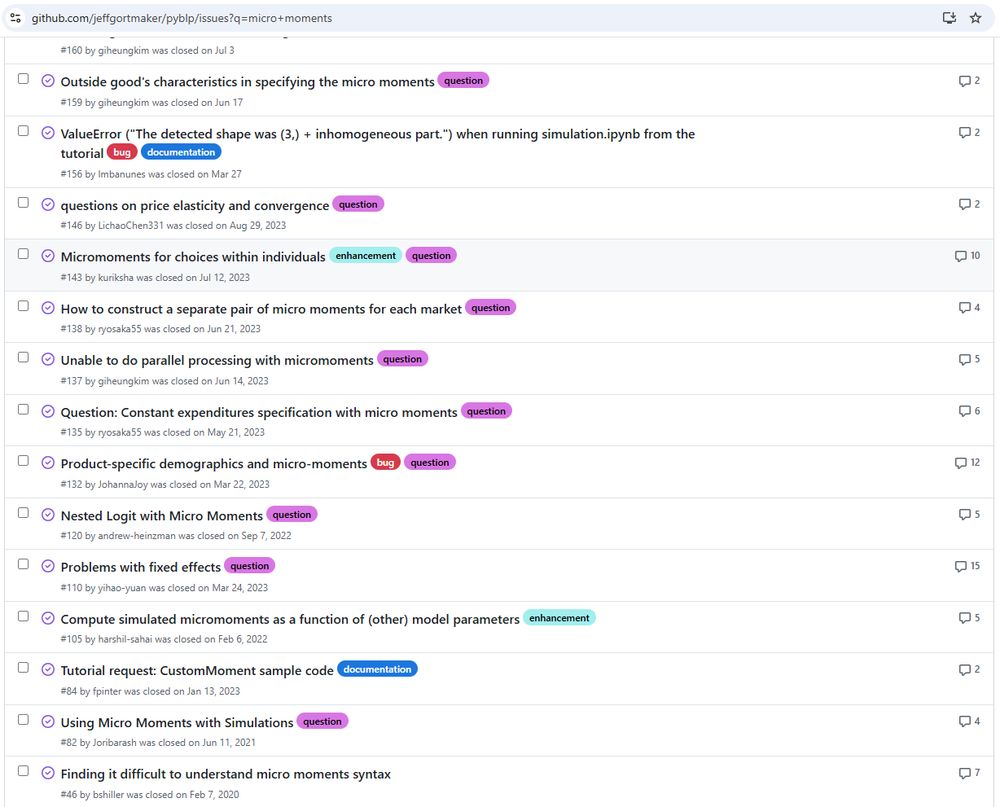
2/6 I expected PyBLP's issue tracker (github.com/jeffgortmake...) to be mostly bug reports, but most are questions. Our 2nd paper was motivated by these interactions, and many of our explanations were informed by discussions on the tracker and emails from less vocal users.
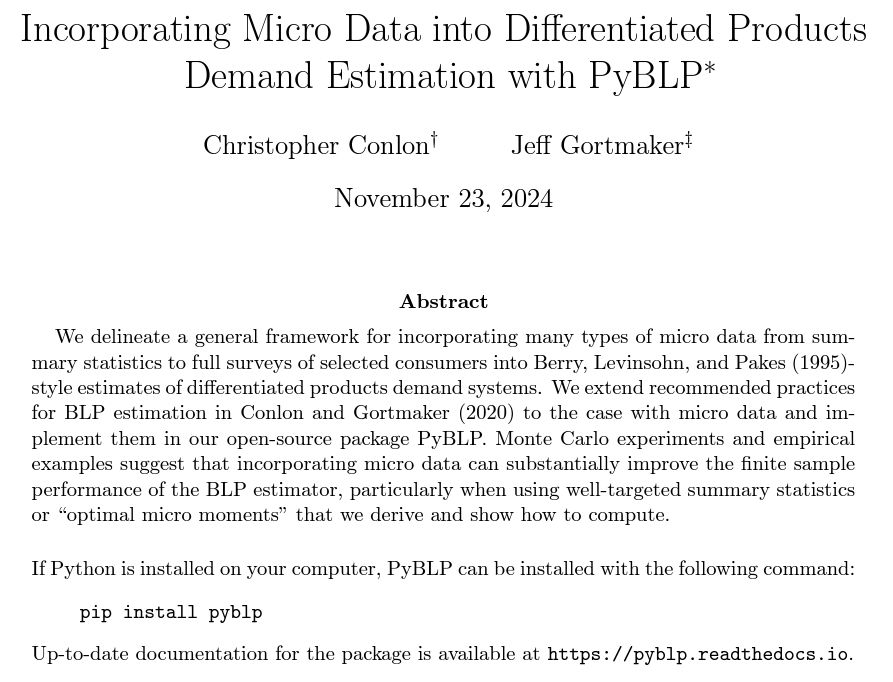
Happy to share that my and @cconlon.bsky.social's micro BLP paper was just accepted at the Journal of Econometrics! jeffgortmaker.com/files/Incorp...
It's our 2nd tied to our PyBLP software, so here's a thread on surprising (to me) benefits of combining methods research with open source work. 1/6
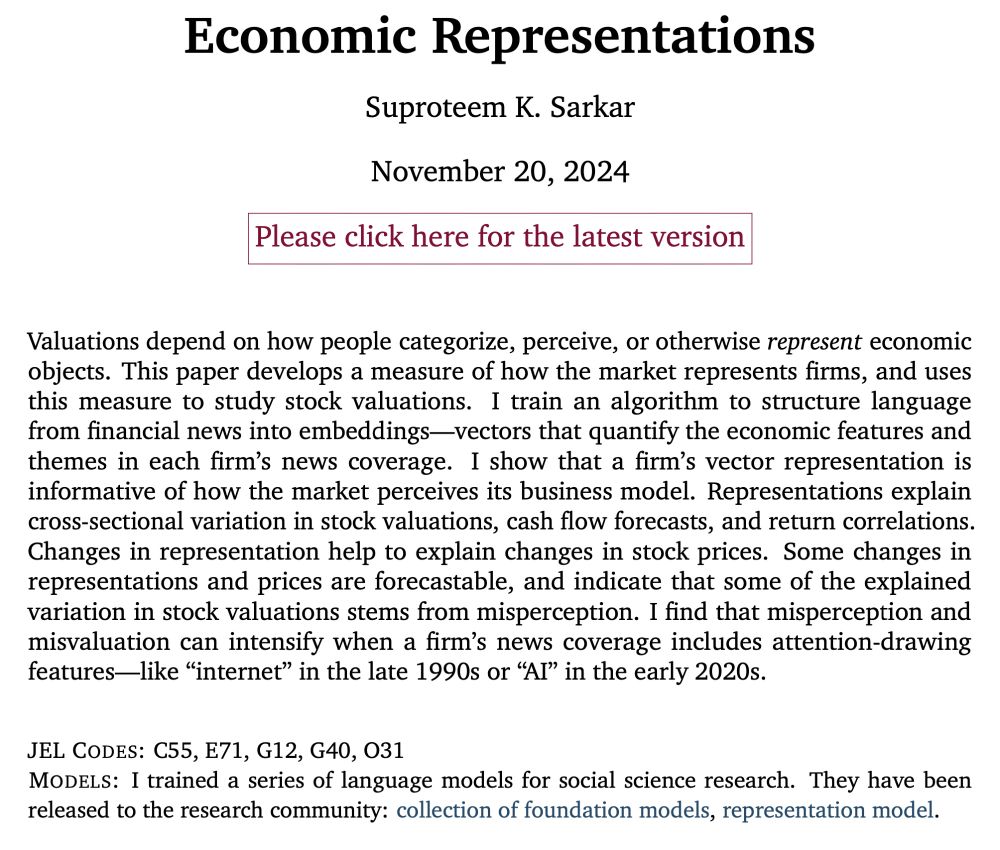
Abstract of paper
Economic valuations fluctuate in ways empirical research cannot fully explain
What information are we missing? Economic theories emphasize the role of hard-to-quantify beliefs and perceptions
My job market paper develops algorithms + measurement to quantify perceptions of firms
I am on the job market, which seems like a great opportunity for my first post on here! My job market paper is about failures of contingent thinking -- the act of reasoning about hypothetical events. 1/
I’m curious whether DeFi legality affects contributions. And time zone would for sure be a useful predictor! (It’s for sure at least somewhat predictive of country on GitHub.) Useful to hear that there’s probably no low hanging fruit for wallet geocoding - thanks.
Legality of geocoding wallets? Makes sense. Best public data I could find from a quick search is a coarse proxy involving web traffic (documents1.worldbank.org/curated/en/7...).
Thanks, Gina! Given your research, I'm curious if you think some comparable spillover stats could be measured for crypto OSS at the country level? E.g., comparing crypto GitHub contributions by country to transaction volumes for geocode-able (?) wallets?
Probably a lot of the questions are the same! A big thing that's changed is the increasing availability of incredible datasets like www.gharchive.org and innovationgraph.github.com
thanks Shosh!
18/18 This has been a joy to write and present (not only because I get to use PyBLP screenshots to illustrate US-China collaboration).
I'm excited to keep studying the tech sector from an IO perspective, and building econometric tools on the way.
Links: jeffgortmaker.com
17/ Subsidies seem more effective and generate large innovation spillovers, especially if the US responds in kind.
Subsidies can be cheap because OSS investment is rare (weak private benefits), but impactful because OSS use is widespread (strong public benefits).
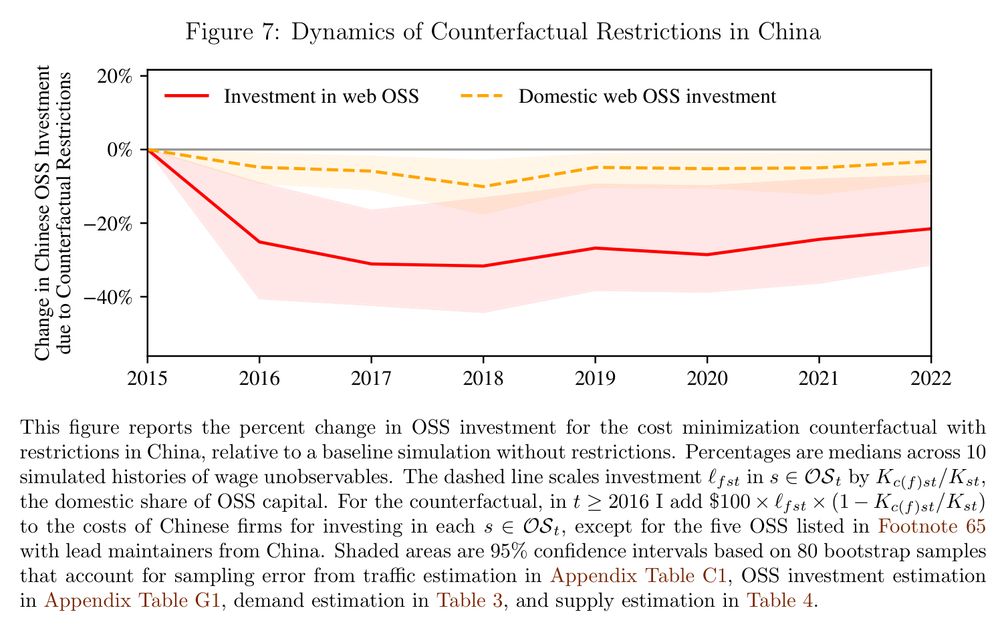
16/ What if China tightened its restrictions?
Benefits don't seem localized enough for a "tax" on foreign collaboration to boost domestic OSS investment. Instead, lost spillovers raise web development costs globally.
15/ These estimates are key inputs into my policy simulations.
Weak private benefits may justify subsidies that reduce underprovision, while strongly localized benefits may justify policies that coordinate domestic investment.