Yes! I recently ran across this book chapter on critique that was great and helped to pull apart and define the tension with criticism. direct.mit.edu/books/book/4...
Wrote about some of my takeaway here. joshbrake.substack.com/p/we-need-cr...
19.02.2026 01:12
👍 1
🔁 0
💬 0
📌 0

The Cookie Box Principle
Generative AI and the temptation to overestimate our willpower
Generative AI offers a set of potential benefits for learning. But like any technology, those benefits are inextricably tied to a set of drawbacks.
What might Frog and Toad’s battle with cookies teach us about engaging generative AI in the classroom?
blog.joshbrake.com/joshbrake/th...
05.08.2025 13:48
👍 1
🔁 0
💬 0
📌 0

Academia: The Questions Are Big! It's the Curricula That Got Small.
Thursday's Child Has Far to Go, But He At Least Read T.J. Kalaitzidis
The latest from @timothyburke.bsky.social is worth a read for all educators thinking critically about genAI and what it means for higher education.
18.07.2025 20:11
👍 4
🔁 0
💬 0
📌 0

Don't Tinker With AI in the Classroom
It's fine to play around by yourself, but if you choose to engage genAI with your students, make sure to think it all the way through
It’s one thing to experiment. It’s quite another to tinker.
We shouldn’t be tinkering with AI in the classroom this fall. Either do the work to articulate the question you’re trying to answer and the specific ways you hope the AI tools will fix it, or don’t use it at all.
15.07.2025 11:44
👍 2
🔁 1
💬 0
📌 0
Great book!
19.05.2025 19:45
👍 1
🔁 0
💬 0
📌 0

Interesting. That is a new term to me.
13.04.2025 01:52
👍 1
🔁 0
💬 0
📌 0
Yes, personalized lesson plans and resources are helpful for enhancing learning. But what’s much more impactful is the personal attention of a teacher. Attention that focuses not just on academic and intellectual development, but on the whole of what it means to be a flourishing human being.
31.03.2025 00:48
👍 2
🔁 0
💬 0
📌 0
Maybe I’m just salty, but for all the discussion around using AI to create something new, it sure seems like a lot of it is focused on diluting the value and beauty of something that already exists.
This is not the only way! But the fact that this is the path being taken should tell us something.
30.03.2025 01:48
👍 2
🔁 0
💬 0
📌 0
“Imitation is the sincerest form of flattery mediocrity can pay to genius.” - Oscar Wilde
Says almost all you need to know about the AI x Studio Ghibli discourse of late. First Johansson, now Ghibli, what next?
30.03.2025 01:48
👍 2
🔁 0
💬 1
📌 0
Anyone aware of examples of such a model? This feels like something that the folks at @hf.co would be thinking about.
29.03.2025 21:30
👍 0
🔁 0
💬 1
📌 0
LLMs by their very structure cut against this grain. By nature, LLMs mix things together into a soup in such a way that it is very hard to untangle the provenance of the inputs. Of course, this is a feature, not a bug. Particularly helpful if you want to obscure the training data.
29.03.2025 21:30
👍 2
🔁 0
💬 1
📌 0
One of the best features of the Internet is the hyperlink. It makes the act of citing one’s sources seamless and helps point the reader to the origin of one’s thoughts. It is a technology that is aligned with a culture of attribution.
29.03.2025 21:30
👍 2
🔁 1
💬 1
📌 0
What we need is something like fair trade AI. Models that are built on a dataset that is clearly disclosed so that we can trace the origins. Even then, there are issues around proper citation of sources that will remain, but at least we’ll know the ingredients in the soup.
29.03.2025 21:30
👍 0
🔁 0
💬 1
📌 0
Mens Sine Manus
Why AGI can't deliver on its promises
"What does it mean to be human?
Do humans possess intrinsic moral worth irrespective of any economic value?
What does it mean for us to be embodied creatures?
How ought we treat our fellow humans?
What does it mean to flourish?"
- @joshbrake.com
open.substack.com/pub/joshbrak...
14.03.2025 14:24
👍 5
🔁 1
💬 0
📌 0
Thanks for coming to my TED talk.
13.03.2025 21:49
👍 1
🔁 1
💬 0
📌 0
Let’s find ways to focus our energy on the important and valuable activities that support learning.
13.03.2025 21:49
👍 1
🔁 0
💬 1
📌 0
Friction is key for traction. Without it, we can’t move anywhere. Think about trying to run on ice. Friction itself is not the enemy.
13.03.2025 21:49
👍 1
🔁 0
💬 1
📌 0
My biggest hope for AI in education is that it increases friction.
Yes, we need to eliminate parasitic friction but friction is a fundamental component of learning. Our discussion (like so many around AI) is suffering from poorly chosen words.
13.03.2025 21:49
👍 3
🔁 1
💬 1
📌 0
With that said, I understand (and agree!) with the underlying thesis: there are lots of way that schooling wastes energy. This is parasitic friction which saps us. But let’s not throw the baby out with the bathwater.
13.03.2025 21:49
👍 1
🔁 0
💬 1
📌 0
Trying to nail down an exact definition of AGI is a fools errand. The more important conversation needs to be focused on when, how, and why we decide to seed our agency to these systems.
10.03.2025 16:40
👍 0
🔁 0
💬 0
📌 0

Technique's Deception
Pursue education, not schooling
In much of our conversation around AI's impact on education we're mixing up education and schooling. This week I turn again to Jacques Ellul and ask what his conception of "technique" might offer us as a lens through which to understand AI and its influence on us.
05.03.2025 21:14
👍 5
🔁 2
💬 0
📌 1

Excerpt from Brake's piece under the section "The False Promise": "The great lie of AI is the false promise of technique—that we can pull ourselves up by our own bootstraps to fix ourselves and our world. That in searching for a more efficient way, we can find technological solutions to human problems. There is no salvation to be found in efficiency."
"There is no salvation to be found in efficiency."
Oh boy, I needed to read this sentence waking up this morning. Stop what you're doing and go read @joshbrake.com:
joshbrake.substack.com/p/techniques...
04.03.2025 13:44
👍 15
🔁 4
💬 2
📌 0
Thanks for the love, Marcus.
05.03.2025 21:13
👍 1
🔁 0
💬 0
📌 0

We're Forgetting How To Fly
What autopilot systems can teach us about the dangers of relying on AI
Looking at the lessons learned from pilots and autopilots has something to teach us about how we should think about the downstream consequences of AI for us and our students.
25.02.2025 17:53
👍 1
🔁 0
💬 0
📌 0
brAIn drAIn
The enhancement and atrophy of human cognition go hand in hand
Great piece here from @erikhoel.blogsky.venki.dev summarizing the main takeaways from the recent Microsoft paper discussing the impact of generative AI on critical thinking.
Those of us helping young people to find their way toward building expertise should take particular notice.
13.02.2025 18:47
👍 4
🔁 1
💬 0
📌 0
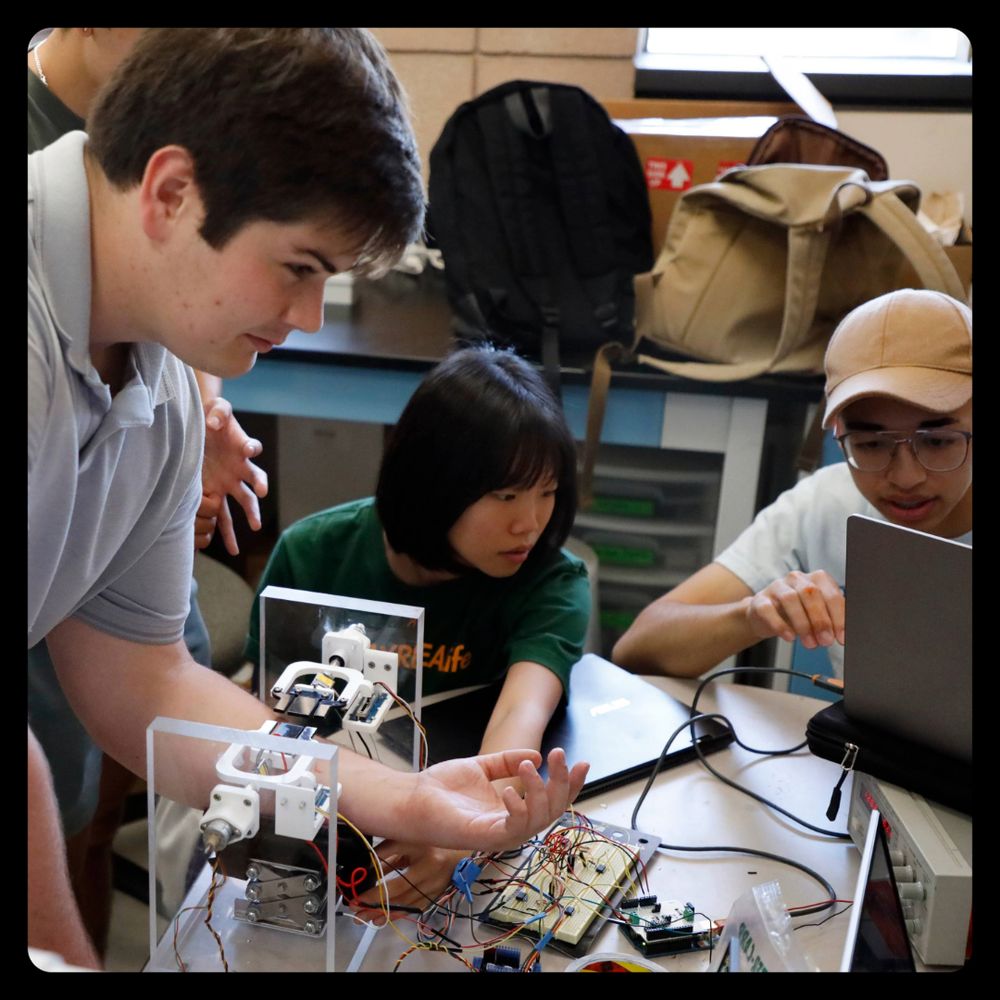
HMC's Department of Engineering provides Mudders with hands-on experience in engineering analysis, synthesis and practice including applied research as early as students’ first year. Learn more via this short YouTube video. uqr.to/edathmc.
30.01.2025 21:29
👍 1
🔁 1
💬 0
📌 0
Ursula's list
Ursula Franklin is one of my all-time favorite thinkers about both the obvious and obscured parts of our technological world.
h/t to @kissane.bsky.social for a great piece about Ursula the other week too that was part of the inspiration for this piece too. And for @audreywatters.bsky.social putting it on my radar!
11.02.2025 18:17
👍 1
🔁 0
💬 1
📌 0

Ursula Speaks
We ought to listen
Ursula Franklin is not a household name, but I'm on a quest to make her one.
She continually comes to mind as I'm thinking about the questions we should ask about AI and its coming and present impact on us. I'm grateful for her work and her courage to ask unpopular questions.
11.02.2025 18:15
👍 3
🔁 0
💬 1
📌 0
Efficient learning is analogous to efficient weight training. There are better and worse ways to train, but at the end of the day, you’ve got to lift the heavy things.
I’m all for using AI to help us learn better, but let’s make sure we’re not just shilling the cognitive version of the ab belt.
05.02.2025 21:40
👍 1
🔁 0
💬 0
📌 0

Beauty for Ashes
Why teaching with honesty and vulnerability matters
Empathy is a core aspect of effective teaching. When you experience pain and suffering, it’s an opportunity to bring it with you into the classroom and model honesty and vulnerability with your students. It’s one of the many aspects of the human teacher that AI can never replace.
05.02.2025 18:07
👍 4
🔁 0
💬 0
📌 0