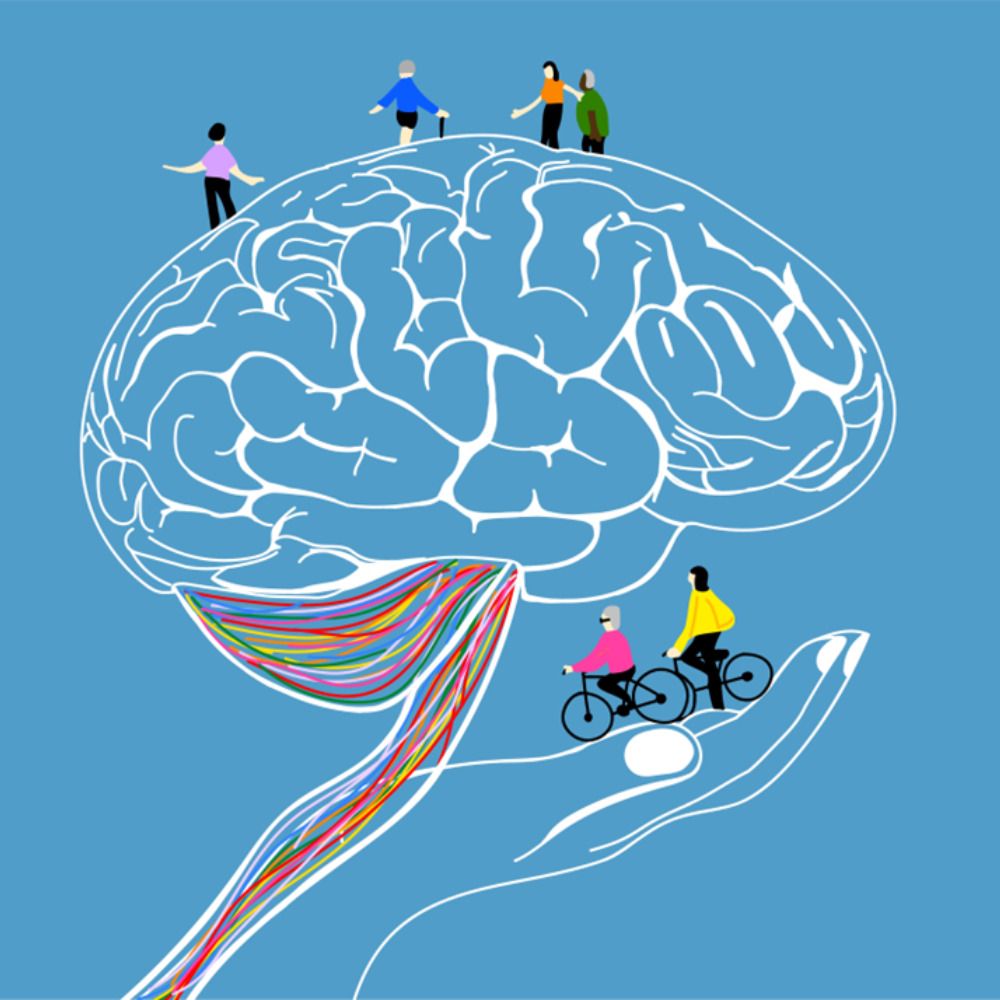
Distinct beta burst motifs exhibit opposing error relationships during motor adaptation https://www.biorxiv.org/content/10.64898/2026.03.06.710026v1
07.03.2026 07:17
👍 7
🔁 3
💬 0
📌 0
Distinct beta burst motifs exhibit opposing error relationships during motor adaptation https://www.biorxiv.org/content/10.64898/2026.03.06.710026v1
Future work is needed to determine whether the claims we are making here are justified at all.
if it forces academia to stop bean counting because there are too many beans, I'm all for it
Very good posts with some interesting insights on what is coming for researchers.... It's not about the number of articles....
17/ Skill atrophy is a real risk—especially for the next generation of scholars. Outsourcing source evaluation, literature reviews, and data coding can undermine deep understanding. For established researchers, the risk is low.
For students, we urgently need to figure things out.
11/ Qualitative research will increase in relative value. If AI can synthesize literature and run regressions, the premium shifts to what it cannot do: fieldwork, interviews, archival work—generating new data from hard-to-reach contexts that did not previously exist.
2/ The static 10,000 word peer-reviewed article is losing its monopoly as THE unit of knowledge production.
If AI handles literature reviews and data analysis, the value is in the research question and the answer—not the paywalled 30-page write-up nobody reads.

Humans can learn bimodal priors in complex sensorimotor behaviour #ProcB #Neuroscience #Cognition royalsocietypublishing.org/rspb/article...
Two grey dots…. Sigh….
Recently, two of them provided me with a more nuanced answer for that question. Best one was the LIMO AI assistent from Clarivate (through uni library) who said “However, this decline may vary … ”. So, what are typically simple questions in your field that would require a nuanced answer?
One problem with literature search based on LLMs is that they rarely provide nuanced answers. My key question is always: Does aging affect proprioception? If the LLM answer an unequivocal YES, then I find its answer bad. Most of them do simply answer YES without nuancing their answer.
Reminder: bioRxiv's "no reviews/hypotheses" policy is something we had from the outset, because it would require subjective judgments akin to peer review (and rapid dissemination seemed less critical for this type of article). The ease of generating these with LLMs make me glad we have it. 2/n

Happy to share that our new paper has been published in the European Journal of Neuroscience (@ejneuroscience.bsky.social)! Using psychophysics, we show that vision fine-tunes self-touch predictions, leading to the temporal modulation of somatosensory perception during movements to self-touch.
How does the brain generalize past experiences without confusing memories? 🧠
Our lab's newest preprint reveals a fundamental division of labor between the cortex and cerebellum that solves this problem. (Check out the cortex-cerebellum video below! 👇) 🧵
I thought that I was a good programmer (in Matlab 😳) and then I started reading "Better Code, Better Science" by @russpoldrack.org ... Let's say that there is room for improvement in my coding practices 😜
bettercodebetterscience.github.io/book/

What if you combine open datasets with AI? Apparently, a 3 fold increase in low quality research papers, mass-produced by paper mills.
Interesting study in @jclinepi.bsky.social #academicsky #episky #medsky #Skystats
Thanks to @maartenvsmeden.bsky.social for initially posting this on Linkedin!
Mental representation without neural representation by @johnwkrakauer.bsky.social
philosophymindscience.org/index.php/ph...
within a whole special issue on "Representation in the Neurosciences and AI"
A consequence of this is the end of open data sharing. Future important datasets will be shared via data transfer agreements or the like to prevent silly papers (that increase noise but not knowledge) to be written based on this.
Where lies the true value of our research? In data from experiments specifically designed to answer careful hypotheses. Forget about large scale and boring datasets that everybody can analyse and produce thousands of silly papers with. The future is in original datasets that LLMs can't produce.
thanks, very useful... I have a (not so small) project where I want to try it out.
Independence of Visuomotor Functions Engaged in Visual Pursuit and Rapid Responses to Reach Errors https://www.biorxiv.org/content/10.64898/2026.02.28.708705v1
@micahgallen.com I am sure that you have plenty of that stuff
I am getting interested to learn from how people are using LLM to code. Github copilot, claude code or ??? Agentic AI or simply via the user interface of (for instance) MS copilot?
Any good resources on how to improve your AI skills for coding? I know there are plenty but which ones are very good?
I know I’m a good reviewer because authors always thank me for my helpful comments.
So, I just moved from bsky.social to eurosky.social . Still here, still seeing you all but my data are now on a European server... Feels safer 😜
Can the FIFA taken the peace price back?

cool people, follow them!
I built a bluesky labeler for neuroscience methods.
1️⃣ follow/subscribe to: @neuromethods.bsky.social
2️⃣ like the post with your favorite method
➡️ get a shiny methods label in your profile/posts. 🌟
indeed. Thanks and fun...
thanks... there is a post for movement kinematics but no labels (eye tracking and psychophysics work but movement kinematics don't)
you have eye tracking...
